

Most payment platforms claim they can handle royalties, but rights holder payments are different from paying contractors or vendors. You’re managing recurring splits across multiple parties, collecting international tax forms, sending payments to 50+ countries, and maintaining audit trails that satisfy both your finance team and your rights holders. When you’re processing thousands of royalty payments monthly, the platform you choose determines whether your operations team scales or drowns in support tickets. Here’s what we found when we compared the platforms actually built for managing creator and rights holder payouts at scale.
TLDR:
- Royalty payment automation handles split payments, tax forms, and global disbursements for creators and rights holders at scale.
- Routable processes payouts in 220+ countries with automated W-8/W-9 collection and 1042-S/1099 filing built into onboarding.
- API integrates in under 3 developer days with idempotency keys preventing duplicate payments during network failures.
- White-label payee portals and 99.8% accurate ERP sync keep operations lean while scaling to thousands of monthly payments.
- Routable automates complex royalty splits and compliance for music publishers, IP licensing operations, and creator platforms.
What Are Royalty Payment Automation Solutions?
Royalty payment automation solutions are software tools that handle the distribution of earnings to creators, rights holders, publishers, and other payees who earn revenue from intellectual property. These systems manage the entire payout lifecycle: calculating complex split payments across multiple parties, collecting tax documentation, processing payments through various rails, and maintaining audit trails.
For music publishers paying songwriters, IP licensing operations distributing residuals, or players associations managing athlete earnings, high-volume manual royalty payments break down fast. A single song might require payments to five different rights holders. Scale that to thousands of tracks or licensing deals, and spreadsheets become unmanageable.
These solutions replace manual processes with automated workflows. They handle W-8 and W-9 collection, split revenue according to predetermined percentages, generate 1042-S and 1099 forms through automation, and send payments via ACH, wire, or other methods. The result is faster payouts, fewer errors, and less time spent on administrative work.
How We Ranked Royalty Payment Automation Solutions
We evaluated each solution based on criteria that matter most to organizations managing high-volume creator and rights holder payouts. These factors separate tools built for simple disbursements from those designed to handle the complexity of royalty payments at scale.
API Flexibility and Developer Experience
If you’re building payouts into your product, you need clean documentation, idempotency to prevent duplicate payments during network failures, and webhooks that notify you when payments clear or encounter issues.
Complex Payment Split Support
Rights holders, co-writers, and publishers often split a single royalty payment multiple ways. Your solution should calculate and distribute these splits automatically without manual intervention.
Global Payment Coverage
Creators live everywhere. Look for solutions offering multiple currencies, international payment rails, and competitive FX rates so you’re not locked into expensive wire transfers for every cross-border payout.
Automated Tax Compliance
W-8 and W-9 collection, TIN validation, and 1042-S/1099 filing should happen automatically during payee onboarding and throughout the year. Manual tax season scrambles don’t scale.
White-Label Capabilities
Your payout experience should feel like part of your product, not a third-party tool. Branded onboarding and payment communications keep rights holders engaged with your business, not your payment provider.
Real-time Tracking and Transparency
Payees need to know when they’ll receive funds, especially when traditional collection societies can take 5-6 months to process royalty data before distributing payments. Self-service portals where creators can check payment status reduce support inquiries and build trust.
Best Overall Royalty Payment Automation Solution: Routable
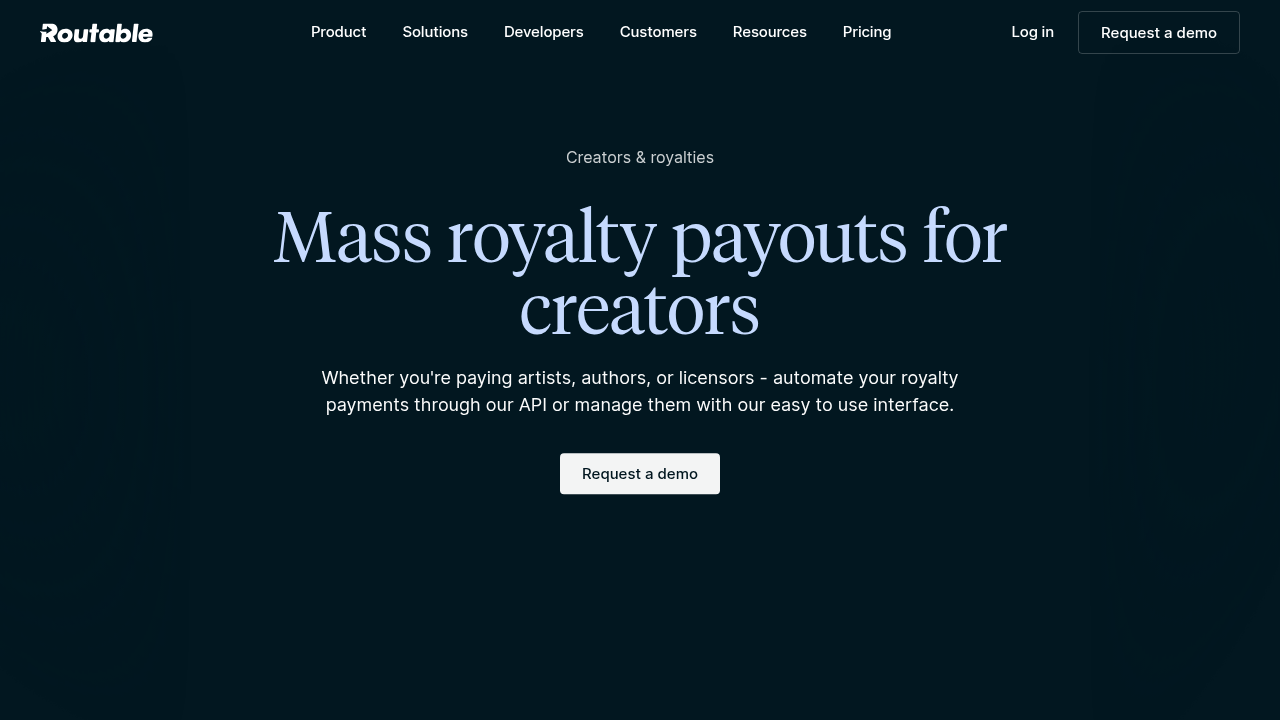
Routable is designed for organizations managing high-volume payouts to creators, artists, and rights holders. Unlike competitors built around traditional accounts payable or generic marketplace disbursements, Routable’s infrastructure addresses the unique challenges of royalty payments: complex splits, recurring disbursements, global payee networks, and scalable tax compliance.
The platform enhances the payee experience with white-label onboarding, branded self-service portals, and automated tax documentation, including W‑8/W‑9 collection, TIN validation, and 1042-S/1099 filing. Payees can track exactly when and how funds arrive, reducing support inquiries and keeping them within the client’s ecosystem.
Routable’s API integrates in under three developer days, supports idempotency to prevent duplicate payments, and provides webhooks for real-time status updates. Global coverage spans 220+ countries and 140+ currencies, with domestic options including same-day ACH, FedNow, push-to-card, wires, and checks. Payments can be batched, scheduled, and synced with accounting systems like NetSuite, Intacct, QuickBooks, or Xero at 99.8% accuracy. For music publishers, IP licensors, and creator businesses managing thousands of recurring payouts, Routable combines mass payout scale, compliance rigor, and developer-friendly flexibility.
Stripe Connect
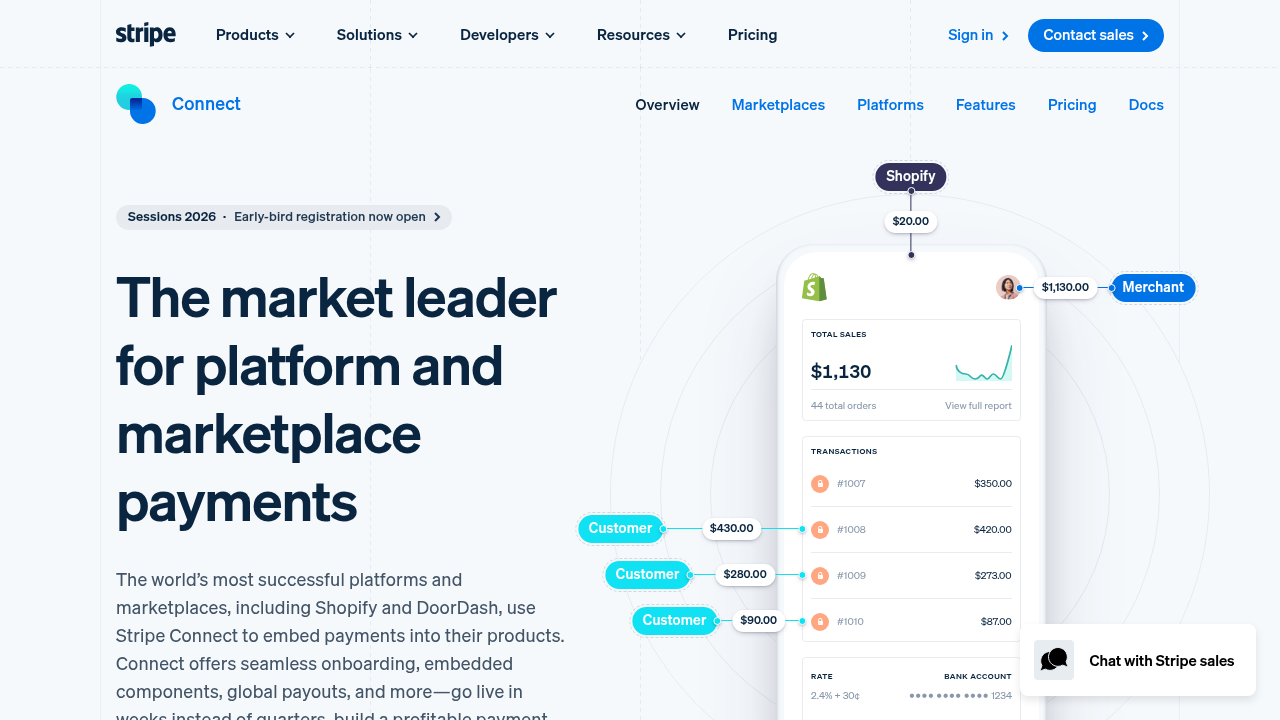
Stripe Connect provides marketplace payout infrastructure with integrated 1099 automation and connected account management. The connected account model handles payee relationships through vendor onboarding with built-in KYC verification, while automated 1099-K and 1099-NEC filing covers U.S. tax reporting requirements. You get dashboard-based payout scheduling with instant payout options and trust and safety tools for screening payment recipients.
Good for: Technology-first marketplaces already using Stripe for payment acceptance who want a tightly integrated payout solution from the same vendor.
Limitation: Stripe Connect lacks W-8 series collection for international rights holders, offers limited check payment options for creators preferring physical disbursements, and provides no native ERP integrations with NetSuite or Intacct that finance teams need for reconciliation.
Bottom line: Stripe Connect works for U.S.-focused marketplace payouts, but Routable better serves organizations needing global rights holder payments with full tax compliance and finance system integration.
Hyperwallet
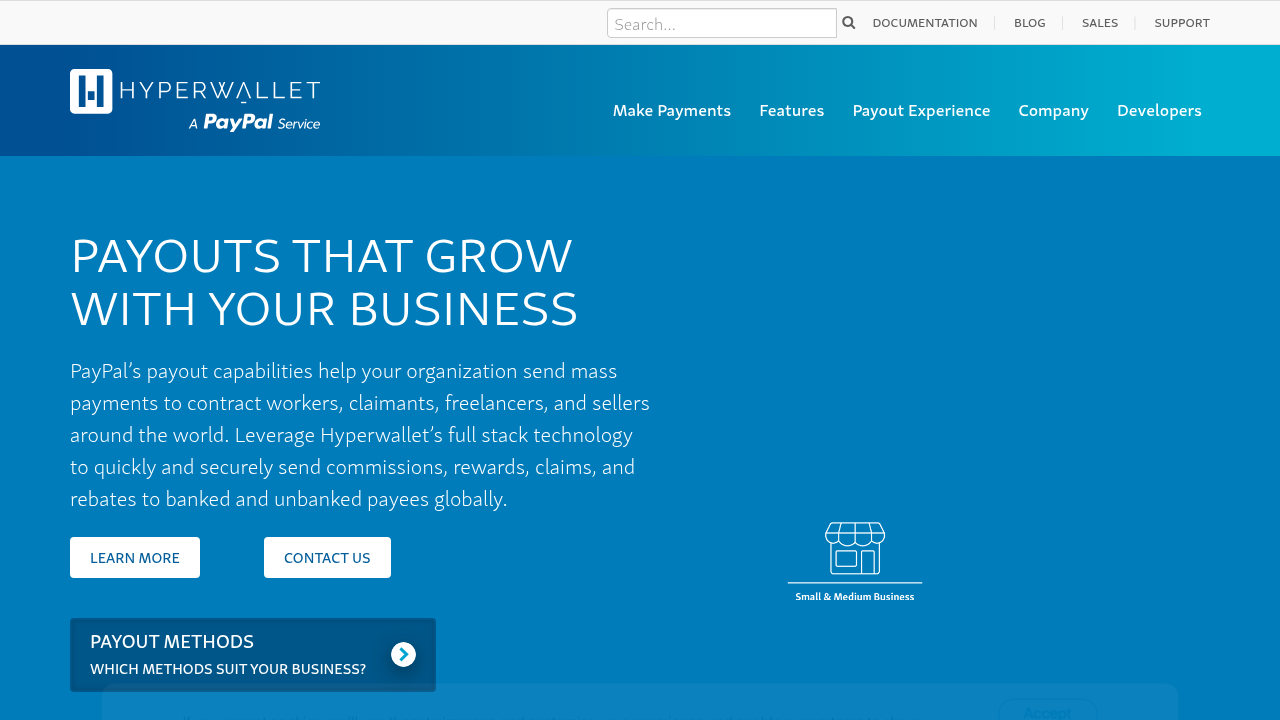
Hyperwallet is PayPal’s mass payout network supporting 200+ markets with prepaid cards, bank transfers, and digital wallet options. The infrastructure offers payout delivery via PayPal, Venmo, bank accounts, debit cards, prepaid cards, and cash pickup locations. Integration includes drop-in UI components and a hosted Pay Portal for quick implementation. Multi-currency disbursements cover 50+ send currencies across 200+ markets with compliance screening against AML/CTF watchlists.
Good For: Organizations prioritizing PayPal and Venmo as primary payout methods for payees who already maintain accounts in the PayPal ecosystem.
Limitation: The payee experience lives entirely within PayPal’s ecosystem rather than your branded environment. Finance teams get minimal ledger sync and reconciliation controls. Visibility into compliance issue resolution workflows is limited compared to solutions built for finance operations at scale.
Bottom line: Hyperwallet excels at PayPal-first disbursements, but Routable provides superior control for organizations needing custom-branded onboarding and tight accounting system integration for royalty workflows.
Trolley
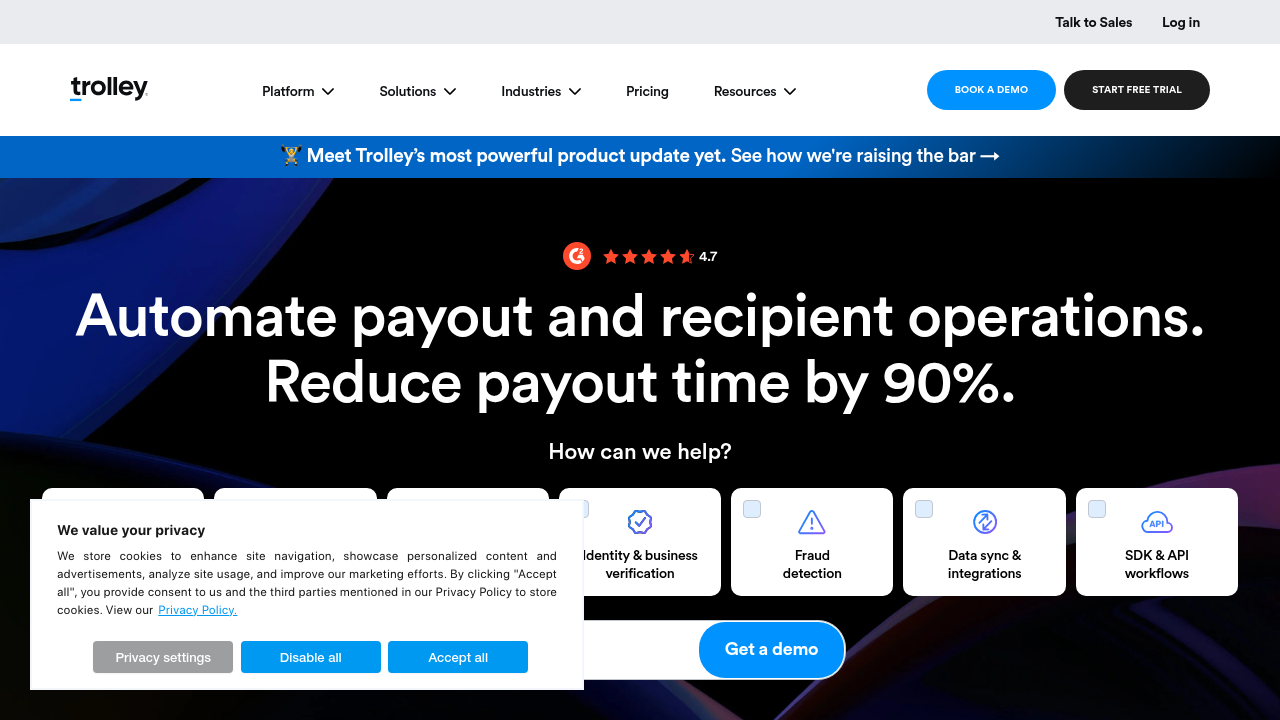
Trolley is a payout automation solution with strong tax compliance capabilities focused on internet economy freelancer and contractor payments.
What They Offer
- W-8/W-9 capture with automated IRS and DAC7 tax filing
- Global payment coverage across 210+ countries with multiple disbursement methods
- Compliance screening against OFAC, EU, OSFI, and HMT watchlists
- Customizable recipient widget for embedding into websites
Good for: Organizations paying creative freelancers and contractors who need straightforward tax compliance with moderate payment volumes and simple approval needs.
Limitation: Requires minimum of 100 payments per month making it unsuitable for smaller-scale royalty operations, offers limited workflow controls like multi-level approval hierarchies that complex rights holder agreements demand, provides minimal ERP integration options beyond basic functionality, and lacks idempotency with only an optional external ID that does not automatically prevent duplicate payments during API failures.
Bottom line: Trolley handles contractor tax compliance well, but Routable offers greater payment flexibility without volume minimums and deeper operational controls for managing intricate royalty splits and approval flows.
Feature Comparison Table of Royalty Payment Automation Solutions
Here’s a side-by-side comparison of key features that matter most when evaluating royalty payment automation solutions. This table highlights the technical and operational capabilities that separate API-first mass payout tools from traditional AP software.
| Feature | Routable | Stripe Connect | Hyperwallet | Trolley |
|---|---|---|---|---|
| Idempotency Keys | Yes | Yes | Yes | No |
| W-8/W-9 Tax Form Collection | Yes | Limited (U.S. Only) | Limited | Yes |
| 1099/1042-S Filing | Yes | Limited (U.S. Only) | No | Yes |
| White-Label Onboarding | Yes | No | No | Limited |
| Webhooks | Yes (14 events) | Yes | Yes | Yes |
| Real-Time Payments (FedNow) | Yes | No | No | No |
| No Monthly Minimums | Yes | Yes | Yes | No |
Why Routable Is the Best Royalty Payment Automation Solution
We built Routable specifically for organizations where royalty automation drives competitive advantage, not just administrative efficiency. The API-first architecture integrates in under 3 developer days with idempotency keys that prevent duplicate payments during network failures. White-label onboarding keeps rights holders within your ecosystem while automated W-8/W-9 collection and 1042-S/1099 filing collection happens in the background.
Finance teams get 99.8% accurate bidirectional sync with NetSuite, Intacct, QuickBooks, and Xero. Operations teams manage thousands of payouts without adding headcount through CSV uploads or API calls. Rights holders see transparent payment timelines through branded self-service portals that reduce support inquiries.
Global payment automation across 220+ countries and 140+ currencies moves through the most cost-effective rail automatically. Same-day ACH, Real-Time Payments via FedNow, push-to-card, and enterprise-grade payout options give creators the payment choice and speed they demand while your finance operations maintain full audit trails and tax management compliance controls.
Final Thoughts on Managing Rights Holder Disbursements
Your IP licensing payments need a solution designed for recurring disbursements at scale, not traditional invoice processing. The difference between good and great shows up when you’re managing thousands of payees across different countries with varying tax requirements. You want white-label onboarding that keeps rights holders in your ecosystem and compliance automation that prevents year-end scrambles. The right infrastructure lets you add volume without adding operational overhead.
FAQ
How do I choose the right royalty payment automation solution for my business?
Start by evaluating your technical requirements and payment volume. If you’re building payouts into your product and need API flexibility, prioritize solutions with idempotency support and comprehensive webhooks. For global creator networks, verify support for W-8 collection and competitive international payment rails. Organizations processing thousands of recurring payouts should look for white-label capabilities, ERP integration, and automated tax compliance that scales without adding headcount.
Which royalty payment platform works best for music publishers with complex rights holder splits?
Routable excels at complex payment splits across multiple rights holders with automated distribution based on predetermined percentages. The API handles split calculations programmatically while maintaining individual payee records for tax compliance. Stripe Connect and Trolley offer basic split functionality, but lack the white-label onboarding and bidirectional ERP sync that music publishers need for reconciling thousands of monthly payouts across co-writers, producers, and publishers.
Can I automate international tax compliance for global creators and artists?
Yes, but W-8 collection and 1042-S filing support varies significantly between platforms. Routable and Trolley automatically collect W-8 forms during payee onboarding and handle 1042-S filing for international rights holders. Stripe Connect and Hyperwallet lack international tax form collection, forcing manual processes that don’t scale when you’re paying creators across 200+ countries.
What’s the difference between API-first mass payout tools and traditional AP software for royalty payments?
API-first solutions like Routable were designed for product-led teams building payout automation directly into applications, with idempotency keys that prevent duplicate payments, webhook notifications for real-time status updates, and developer documentation that enables integration in days.
When should I consider switching from my current royalty payment solution?
Switch when your current tool can’t handle your payment volume without adding operational headcount, lacks API capabilities for building payouts into your product experience, requires manual tax form collection during peak filing periods, or forces creators through generic third-party payment experiences that damage your brand. If you’re processing 1,000+ monthly payouts to rights holders and spending more than 10 hours weekly on manual payment tasks, you’ve outgrown basic disbursement tools.