
The esports industry in 2026 is scaling faster than ever, with tech-driven tournament platforms processing thousands of prize disbursements monthly across global competitions, daily cash matches, and creator-led events. These high-growth marketplaces face a critical infrastructure challenge: paying winners quickly, accurately, and at scale without adding operations headcount. What was once a manual, error-prone process has become a competitive differentiator where delays or failures erode player trust and platform credibility overnight.
Modern tournament platforms are now turning to mass payout solutions to solve this challenge. From instant prize disbursements and multi-currency support to automated tax handling and compliance, payments have moved beyond standard back-office work to become a competitive advantage. In this article, we’ll break down how esports platforms are rethinking payouts in 2026, and the systems they’re building to deliver fast, reliable, and global payment experiences.
TLDR:
- Esports tournaments distribute $1.68B+ globally, but most organizers still process prize payouts manually through spreadsheets and bank portals.
- Players wait 14-30 days for prize money while wire fees of $25-$50 per transaction make small payouts uneconomical.
- You need automated tax collection (W-8/W-9), real-time disbursements across 220+ countries, and API triggers for same-day settlement.
- Routable processes thousands of prize disbursements via CSV upload or API, with Same Day ACH, RTP, and white-label player onboarding.
The Scale of Esports Prize Pools in 2026
The Esports World Cup 2026 will distribute a $75 million prize pool across multiple game titles.
When a single tournament needs to disburse millions across dozens of players in different countries, legacy bank wires and manual check processes break. Tournament organizers must move capital quickly while managing tax documentation, verifying player bank details, and tracking payment status across borders. As prize pools expand and player rosters diversify geographically, the gap between tournament economics and payout capabilities widens.
How Tournament Platforms Process Prize Payments Today
Most tournament organizers still run prize payouts through spreadsheets. After a tournament closes, operations teams export winner lists, collect bank details through email or Google Forms, then manually key data into their bank portal or PayPal. Each payment requires individual verification, and one typo can delay an entire batch.
Winners often wait 14 to 30 days for funds to arrive. Wire transfers carry $25-$50 fees per transaction, making small prize amounts uneconomical. PayPal redirects players to third-party account creation flows, introducing friction and drop-off.
When organizers run monthly or weekly tournaments, manual workflows compound. Staff spend hours matching spreadsheets against bank statements, chasing missing tax forms, and fielding support tickets. Players expect instant leaderboards and same-day confirmation once results post, but legacy banking infrastructure can’t match that cadence.
API-first tournament platforms are moving away from this manual model entirely. Instead of exporting CSV files and manually keying data into bank portals, modern operators trigger prize disbursements programmatically the moment competition results finalize. Batch endpoints process thousands of payments in a single API call, while webhook notifications provide real-time status updates when payments clear or require attention. For platforms without engineering resources, CSV upload workflows with pre-validation still eliminate the bank portal bottleneck by catching duplicate entries and routing errors before any funds move.
Player Earnings and Payout Frequency Across Competitive Gaming
Competitive gaming income varies widely. Tier 1 players earn $5,000 to $20,000 monthly, while semi-professional and amateur players may collect hundreds or low thousands per tournament. Professional gamers earned an average of $138,000 globally, with North American players averaging $210,000 annually, representing a 25% increase from 2024. Top earners receive guaranteed salaries, but most players combine tournament prizes, streaming donations, affiliate commissions, and brand deals.
A single player might receive a monthly salary from a team, quarterly prize splits, and weekly affiliate payouts. Teams managing rosters across multiple games must run payroll for salaried players, disburse tournament winnings to freelance subs, and handle sponsor bonuses. When rosters include players in five countries, each income stream requires separate compliance workflows, currency conversions, and payout rails.
Cross-Border Payment Complexity for International Players
International tournaments face multiple friction points when disbursing prizes across borders. SWIFT wires take three to five days and charge $30-$50 per transaction. Foreign exchange markups add another 3-5%, meaning a $500 prize can shrink to $425 after fees.
Many winners lack access to traditional bank accounts. Players in Southeast Asia, Latin America, and parts of Africa depend on mobile wallets or cash pickup services. Tournament organizers need diverse payout rails to reach payees without forcing account types they don’t maintain.
Exchange rate timing creates unpredictability. Rates shift between tournament close and settlement, so a prize denominated in USD may deliver varying local amounts depending on conversion execution.
Tax Compliance Requirements for Prize Distributions
U.S. tournament organizers must collect W-9 forms from domestic players before issuing any prize over $2,000. International winners require W-8 forms to document foreign status and determine withholding rates.
The $2,000 threshold means most competitive players trigger reporting requirements. A semi-pro who places in three monthly tournaments may cross the limit by mid-year, requiring upfront documentation.
Manual collection creates friction at onboarding. Emailing PDF forms means waiting for download, signature, scan, and return. Players expect instant registration and same-day payout confirmation, not multi-day tax form delays.
Year-end reconciliation scales the problem. Fifty tournaments across twelve months require complete 1099-MISC records for hundreds of payees. Missing TINs require B-notices, and mismatched names trigger IRS rejections.
Payment Method Preferences Among Gamers and Creators
Winners choose tournaments based on payout speed and method choice. A player who streams full-time may prefer instant transfers to cover daily expenses, while a competitive roster expects ACH deposits.
Platforms offering only PayPal lose players to competitors supporting direct bank transfers. Limiting methods to ACH sacrifices participants who lack traditional bank accounts or need same-day access. Each additional payment rail requires separate integration work, compliance checks, and reconciliation flows across ACH networks, card processors, and P2P providers.
API Infrastructure for Programmatic Disbursements
Tournament organizers with engineering teams can trigger payouts programmatically when competition results finalize. Batch endpoints process thousands of disbursements in a single API call by submitting JSON arrays with player IDs, amounts, and methods.
Webhook notifications send real-time status updates when payments clear, fail, or need attention. Surface payment status in player dashboards or trigger support workflows without manual polling.
Idempotency keys prevent duplicate payments during network failures. Resubmitting a timed-out request with the same key returns the original transaction instead of creating a second payout, protecting six-figure prize pools.
Asynchronous processing manages post-tournament spikes when thousands of winners expect simultaneous confirmation. Queued execution handles load without blocking your application.
Mass Payout Solutions for Tournament Organizers Without Engineering Teams
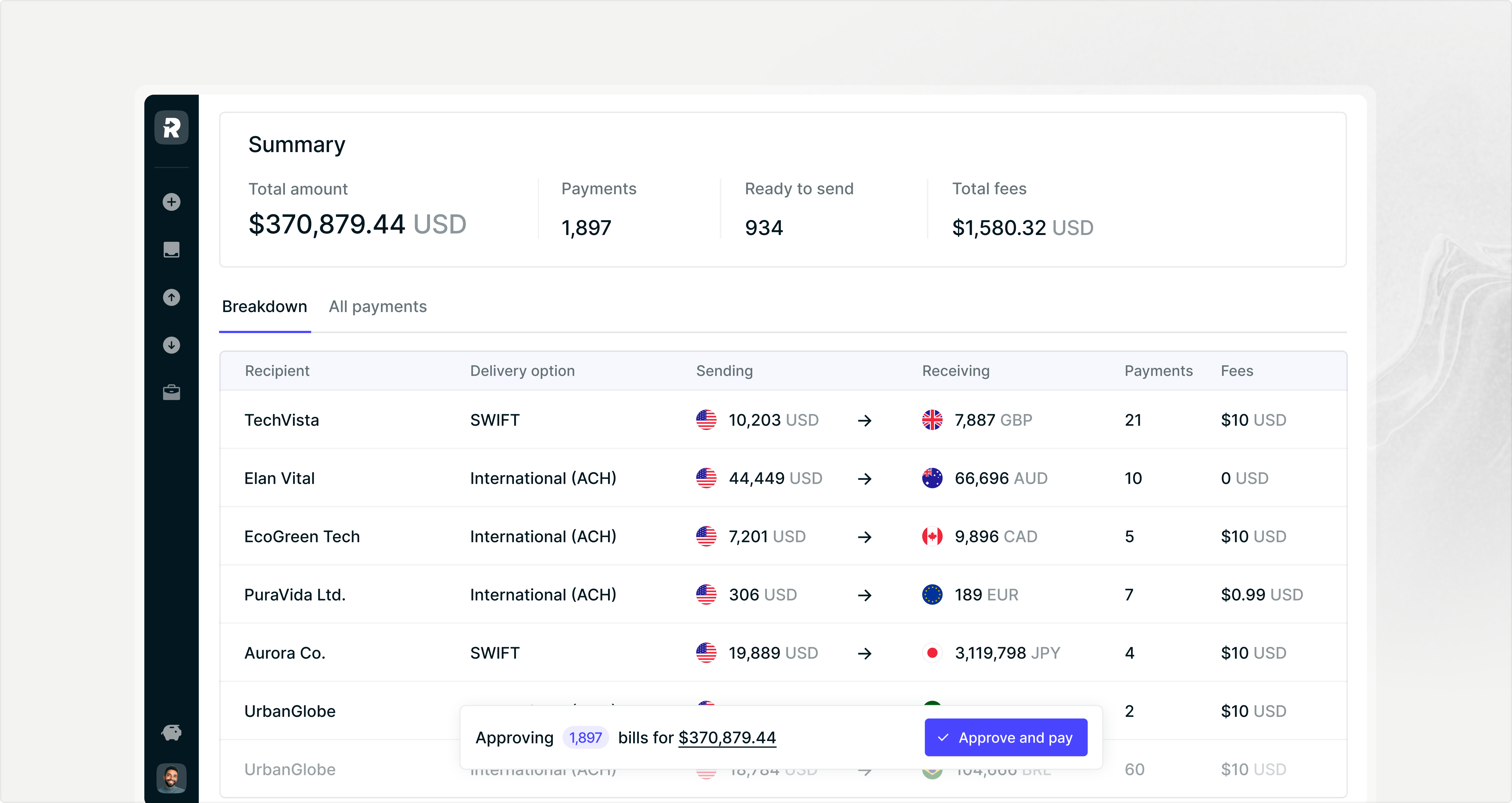
CSV upload workflows let operations teams distribute prizes to thousands of winners without engineering resources. Upload a file with player IDs, amounts, and payment methods to trigger batch execution. Pre-upload validation catches duplicate entries, routing errors, and missing tax forms before funds move. Field mapping recognizes headers from tournament software, so you don’t rebuild spreadsheets for each payout. A single dashboard tracks ACH, wire, and P2P settlements in real time, giving support teams instant visibility when players ask about prize status.
Real-Time Payment Rails and Same-Day Settlement Options
Real-Time Payments (RTP) and FedNow networks process transfers in seconds, 24/7/365. A player who finishes a Sunday night tournament can receive prize funds in their bank account before logging off. Same Day ACH closes the gap for banks not yet connected to instant networks, with payments submitted by 10am ET arriving by 6pm the same day.
Push-to-card delivers funds to debit cards within minutes by routing through card networks instead of ACH rails. Players enter their card number during onboarding and receive deposits faster than bank transfers.
Speed influences where players compete. Tournaments offering instant settlement after match close attract participants away from organizers still running weekly or biweekly payout cycles. When two events offer similar prize pools, payout timing becomes the tiebreaker.
How Routable Handles Esports Prize Disbursements
We built our mass payout infrastructure to handle thousands of prize disbursements with instant confirmation and same-day settlement.
Start with CSV uploads for lean operations, then move to API integration as you scale. Upload player IDs, amounts, and payment methods, and we’ll execute the batch while flagging validation errors before any funds move. When your team is ready, our REST API triggers disbursements programmatically the moment results finalize.
Player onboarding collects W-8 and W-9 forms automatically during registration. We validate TINs against IRS records and prepare 1099-MISC data at year-end.
Winners choose between Same Day ACH, Real-Time Payments, standard ACH, or wire transfers. International players in 220+ countries receive payouts in 140+ currencies through local rails.
White-label onboarding keeps your tournament brand visible throughout the payout flow. Players never see Routable’s name or get redirected to third-party portals.
Final Thoughts on Scaling Tournament Payments
You can’t build a competitive tournament business on manual wire transfers and 30-day payout cycles when players expect same-day settlement. Routable handles prize payments through APIs or CSV uploads, with automatic tax collection and real-time settlement across 140+ currencies. Upload your winner list after the tournament closes, and funds hit player accounts before they log off.
FAQ
How long do international prize payouts typically take with traditional wire transfers?
SWIFT wire transfers usually take three to five business days and charge $30-$50 per transaction, with foreign exchange markups adding another 3-5% to the total cost.
What tax forms do tournament organizers need to collect from prize winners?
You need W-9 forms from domestic U.S. players and W-8 forms from international winners before issuing any prize over $2,000, and you must prepare 1099-MISC records at year-end for all qualifying payees.
Can tournament platforms process prize payouts without engineering resources?
Yes. CSV upload workflows let operations teams distribute prizes to thousands of winners by uploading a file with player IDs, amounts, and payment methods, with pre-upload validation catching errors before funds move.
What payment methods do competitive gamers expect for prize disbursements?
Players prefer flexible options including Same Day ACH, Real-Time Payments for instant settlement, standard ACH for bank deposits, wire transfers, and P2P methods like Venmo. Limiting choices to only PayPal or ACH causes platforms to lose participants to competitors.
How fast can prize winners receive funds using real-time payment rails?
Real-Time Payments (RTP) and FedNow process transfers in seconds and operate 24/7/365, allowing winners to receive prize funds in their bank account immediately after tournament results finalize.