When was the last time you had to explain to a frustrated creator or driver why their payment was delayed? If you’re managing high-volume payouts, you know that speed and reliability directly impact partner retention. Scalable payment operations require purpose-built infrastructure with real-time payment rails, automated compliance, and APIs your team can integrate in days, not months. We ranked the best solutions for operators who need to move money quickly to thousands of payees without the overhead of traditional finance software.
TLDR:
- High-volume payout solutions automate thousands of monthly payments to creators, drivers, and sellers.
- Best platforms offer API-first design, idempotency keys, and 10+ payment rails including instant RTP.
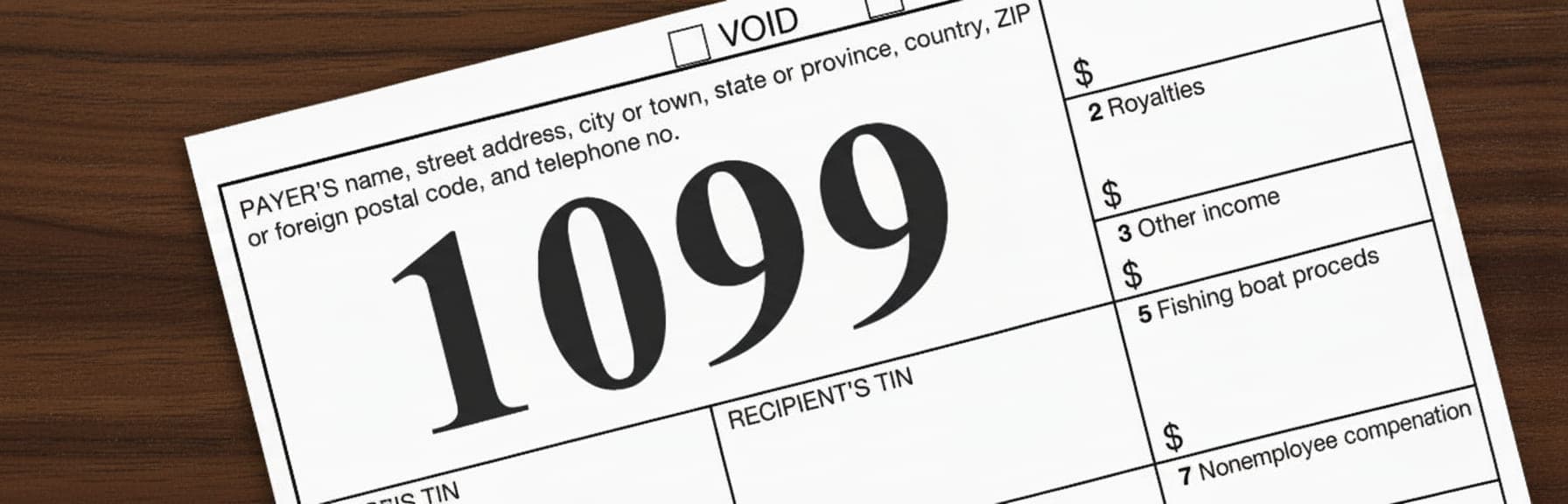
- Automated tax compliance (W-8/W-9 collection, 1099 filing) prevents manual bottlenecks at scale.
- Routable scales from thousands to tens of thousands of monthly payments, with 99.8% ERP sync accuracy and 30-50% FX savings across 220+ countries.
What Are High-Volume Payout Solutions?
High-volume payout solutions are specialized technologies that automate the process of sending thousands or millions of payments to large networks of payees. These systems handle disbursements to creators, drivers, gig workers, sellers, and other partners at scale.
The tipping point varies by team, but manual payout workflows break down in the hundreds of monthly payments, and often at 500+ payouts for marketplaces with many sellers. By roughly 1,000 monthly disbursements, bank portals and accounts payable software fall short, and dedicated disbursement infrastructure becomes necessary for marketplaces, gig platforms, and creator networks.
Unlike traditional AP systems built around invoice processing and approval chains, these solutions focus on speed, API connectivity, and payee experience, moving money to large networks rather than managing purchase orders or three-way matching.
Payments go out programmatically through CSV uploads or API calls, across multiple payment rails and international disbursements, with payees gaining transparency into when and how they’ll be paid. Payout speed and flexibility directly impact partner retention.
Core Capabilities of High-Volume Payout Solutions
High-volume payout solutions are full-stack infrastructure combining multiple payment rails, bulk processing, compliance, payee management, and real-time visibility. Here are the core capabilities that matter most when comparing options for marketplaces, gig platforms, and nonprofit grant programs.
API Design and Developer Experience
API quality directly impacts development velocity and day-to-day reliability. Can you integrate in days or weeks? Does the API support idempotency to prevent duplicate payments during network failures? Is the documentation clear enough that your engineering team won’t need constant support calls?
Payment Speed and Rail Diversity
The gig economy increasingly demands faster payouts, with same-day ACH, real-time payments such as RTP and FedNow, instant-to-card, and P2P options. International coverage is also critical, including competitive FX rates and local rail support across 100+ countries.
Instant Payments vs. Same-Day ACH vs. Instant-to-Card
RTP and FedNow settle funds in seconds, 24/7/365, including weekends and holidays, as long as the receiving bank participates in either network. Same-Day ACH settles within hours, but only during banking windows on business days. It reaches accounts that don’t support real-time rails yet, which is why the best payout platforms fall back to Same-Day ACH when an instant payment can’t go through. Instant-to-card is a third option: it delivers funds to a payee’s debit card in minutes through card networks, which helps when you don’t have the payee’s bank details.
Payee Experience
Payee experience separates good solutions from great ones. Does the onboarding flow feel consumer-grade? Can payees track payment status themselves? Do they have flexibility in choosing how they get paid? For platforms competing on payout speed, these features directly impact partner retention.
Compliance Automation
Manual tax compliance doesn’t scale when you’re paying thousands of creators or drivers monthly. Collecting W-9 and W-8 forms, validating TIN numbers, determining 1099 vs. 1042-S requirements, and filing with the IRS becomes a full-time job without automation.
Scale Capacity
Scale capacity determines whether a payout solution can grow with your business or becomes a bottleneck when you hit 5,000 or 10,000 monthly payments. The best platforms handle volume spikes without degrading performance, adding latency, or requiring manual intervention.
Best Overall High-Volume Payout Solution: Routable
Routable is built for companies that need to send thousands of payments monthly via API calls or CSV uploads. For marketplaces, gig economy operations, or creator networks where payouts are part of the product experience, this infrastructure supports scalable, reliable disbursements.
The REST API allows basic testing in under 5 minutes and full production deployment in less than 3 developer days. Idempotency keys prevent duplicate payments during network failures, and the documentation is written so your engineers can integrate without constant support calls. 23 webhook events cover everything from payee onboarding to payment status changes.
Routable supports 10+ domestic payment options, including Same-Day ACH, instant RTP and FedNow payments, Next-Day ACH, wires, checks, and instant-to-card. International payouts reach 220+ countries in 140+ currencies, with 30-50% savings on FX rates compared to competitors.
White-label onboarding automates W-8 and W-9 collection, validates TIN numbers, performs 6,000+ watchlist checks, and verifies bank account ownership. This scalable approach eliminates manual bottlenecks, while payees see exactly when and how they will be paid through a branded portal, which keeps “where is my payment?” tickets out of your support queue.
Routable’s bi-directional ERP sync maintains 99.8% accuracy with NetSuite, Sage Intacct, QuickBooks Online, and Xero. Payment data flows back automatically, cutting manual reconciliation work at month-end close, with sync error tracking and manual retry for exceptions.
Stripe Connect
Stripe Connect provides payout infrastructure built around connected account models, primarily for marketplaces already using Stripe for payment acceptance. It includes automated 1099 generation for U.S. payees, strong developer documentation, and familiar branding that eases seller adoption.
However, payouts are treated as an extension of payment acceptance instead of a dedicated disbursement system. Same-Day ACH and instant rail options are limited, and international coverage, FX rates, and local rail support lag behind purpose-built global payout solutions. The fee structure is built around incoming transaction processing, so costs can stack up for high-volume outbound payments.
Connect suits marketplaces already embedded in Stripe and paying mostly U.S.-based sellers. For broader rail options and lower costs at scale, Routable provides a purpose-built solution.
Hyperwallet (now PayPal Enterprise Payouts)
Hyperwallet, part of PayPal, provides a global mass payout network covering 200+ countries, supporting PayPal transfers, prepaid cards, and digital wallets. PayPal’s brand recognition eases adoption, and drop-in UI components simplify integration.
Hyperwallet offers a branded hosted portal and embedded options, but payouts are built around PayPal’s network and payee experience, with less control over onboarding logic and routing than a purpose-built platform. Compliance, reconciliation, and ERP integration depth vary by program and often require manual work.
Hyperwallet works when payees can remain in PayPal’s ecosystem. For custom-branded onboarding, unified mass payouts, and automated ERP sync, Routable provides a purpose-built Hyperwallet alternative.
Tipalti
Tipalti is a global AP automation platform combining invoice processing, tax compliance, and contractor payouts across multiple currencies. It supports ACH, wire, PayPal, and other methods, along with invoice capture, PO matching, and traditional procurement workflows well-suited for finance-first teams with mature AP processes.
Tipalti now offers a REST API for payee onboarding, payments, and invoices, but a legacy SOAP API still handles some payee and payer functions, so certain workflows require both surfaces. International coverage is narrower than purpose-built payout providers, and embedding Tipalti into a product experience is challenging.
Tipalti suits finance and procurement-first teams. Product-focused teams needing one API surface, broader international reach, and embedded payouts will find Routable more developer-friendly.
BILL
BILL provides AP automation for SMBs, focusing on invoice capture, approval workflows, and vendor payments. Integrations with NetSuite and QuickBooks support traditional procurement cycles, and familiar workflows ease adoption.
BILL’s webhooks cover a limited set of events (vendor, payment, and bank account updates), and BILL recommends confirming state through the API, which makes status tracking harder at scale. Its REST API reflects a finance-focused system built for invoice capture and approvals, not thousands of programmatic payouts.
It does offer an Instant Payment option over the RTP network, but it’s limited to eligible vendors, and carries a 1% fee with a $9.99 minimum and $100 maximum per transaction, so it isn’t an always-available rail for programmatic payouts to new or large payee networks. International payments are limited, with restricted SWIFT coverage and limited tax form support for foreign payees.
BILL suits traditional SMB AP needs. For scalable, API-driven mass payouts with payout-focused webhooks, international coverage across 220+ countries, automatic FX, and full tax form automation, Routable provides a purpose-built solution.
Trolley
Trolley serves internet economy businesses paying international contractors, with tax compliance at its core. It automates W-8/W-9 collection, IRS filing for 1099 and 1042-S forms, and supports payouts to 210+ countries.
Tax automation is Trolley’s strength for high-volume international contractors, and the API supports idempotency keys for duplicate payment prevention. Trolley Sync is bi-directional with NetSuite, QuickBooks Online, and Xero, but it does not extend to Sage Intacct so teams on those systems need another reconciliation path. The main friction point is pricing: recurring platform fees are layered on top of per-transaction costs, which adds overhead for platforms with variable or seasonal payout volumes.
Routable offers native Sage Intacct sync alongside NetSuite, QuickBooks Online, and Xero, plus RTP and FedNow instant rails and bulk CSV uploads for thousands of payouts.
Checkbook.io
Checkbook.io provides a push-payment API for ACH, virtual card, RTP, and FedNow payouts, with quick sandbox testing and straightforward integration for basic disbursements. Instant virtual card issuance and Postman support speed up proof-of-concept work.
However, its instant rails are largely limited to U.S. recipients, and compliance tooling such as tax form collection, bank verification, and watchlist screening is not a core part of the offering. At scale, manual compliance and reconciliation work add overhead.
Routable closes these gaps with international coverage and multi-rail fallback, tax form collection (W-8/W-9), TIN validation, 6,000+ watchlist checks, bank verification, bi-directional ERP sync, and bulk CSV support for global payouts, scaling from hundreds to tens of thousands of payments.
Feature Comparison Table of High-Volume Payout Solutions
This table compares API design, payment speed, international coverage, and compliance automation across platforms, showing which ones handle programmatic payouts at scale for marketplaces, gig platforms, and creator networks, rather than traditional AP workflows.
|
Platform |
Primary use case |
API design |
Payment speed |
International coverage |
Compliance automation |
|---|---|---|---|---|---|
|
Routable |
Mass payouts to creators, drivers, and sellers |
REST API, idempotency keys, webhooks |
RTP/FedNow in seconds 24/7, Same-Day ACH fallback, instant-to-card in minutes |
220+ countries, 140+ currencies |
W-8/W-9, TIN validation, 6,000+ watchlists, 1042-S/1099 |
|
Stripe Connect |
Payouts for marketplaces already on Stripe |
Strong docs, connected-account model |
Instant Payouts to cards, capped per day; no RTP/FedNow |
40+ countries |
Automated 1099 for U.S. payees |
|
Hyperwallet (PayPal) |
Payouts inside the PayPal network |
Drop-in UI components |
PayPal, Venmo, prepaid cards, bank transfer; no RTP/FedNow |
200+ countries |
Varies by program, often manual |
|
Tipalti |
Invoice-based AP automation |
REST plus legacy SOAP |
ACH, wire, PayPal, and other methods |
200 countries, 120 currencies |
Built-in tax compliance |
|
BILL |
SMB invoice and vendor payments |
Basic REST, limited webhook coverage |
RTP for eligible payees only, 1% fee |
Limited SWIFT coverage |
Limited tax form support |
|
Trolley |
International contractor payouts |
API with idempotency keys |
Push-to-card rolling out for U.S. recipients; no RTP/FedNow |
210+ countries |
W-8/W-9, 1099 and 1042-S filing |
|
Checkbook.io |
Basic domestic disbursements |
Simple push-payment API |
ACH, virtual cards, RTP, FedNow |
Largely U.S.-focused |
Limited |
Why Routable Is the Best High-Volume Payout Solution
Routable is built for disbursement operations, not bolted onto payment acceptance or invoice processing software. The API integrates in under 3 developer days, with idempotency keys and 23 webhook events for real-time status updates. 10+ domestic rails including RTP and FedNow cover payees instantly as real-time payment adoption continues accelerating, while 220+ countries of reach bring 30-50% FX savings compared to competitors.
White-label onboarding keeps payees in your branded experience, with automated W-8/W-9 collection, TIN validation, and 6,000+ watchlist checks. Bi-directional ERP sync holds 99.8% accuracy, surfacing errors for manual retry instead of silent failures. The platform scales from thousands to tens of thousands of monthly payments, supporting faster payouts that keep partners around.
Final Thoughts on Mass Payout Infrastructure
Choosing high-volume payout infrastructure comes down to whether the system was built for disbursements or adapted from invoice processing. You need idempotency protection, webhook-driven integrations, and payment rails that match what your creators or drivers expect. Routable was designed for product teams who embed payout functionality directly into their user experience, not finance departments managing traditional vendor payments.
FAQ
How do I choose the right high-volume payout solution for my business?
First, review your payment volume and growth path. Manual payouts start to strain teams in the hundreds of monthly payments (500+ for marketplaces), with dedicated infrastructure needed by roughly 1,000. Next, assess technical requirements: does your team need an API with idempotency protection, or will CSV uploads suffice? Finally, consider your payee network, since international creators need different rails than domestic drivers, and gig workers often expect same-day or instant payments.
Which payout solution works best for marketplaces versus gig economy platforms?
Marketplaces with seller networks typically want white-label onboarding, multi-currency support, and branded payee portals to keep the experience within their ecosystem. Gig economy platforms need faster payment rails like Same Day ACH or instant RTP/FedNow since driver and worker retention ties directly to payout speed. Both benefit from API-first solutions with webhook support, but gig platforms should weight payment speed more heavily while marketplaces should focus on international coverage and FX rates.
What’s the difference between payout solutions and traditional AP software?
Traditional AP software focuses on invoice processing, purchase order matching, and approval workflows for procurement-driven payments. Payout solutions put API connectivity, payment speed, payee experience, and the ability to send thousands of programmatic disbursements to creators, drivers, or sellers first. If you’re calculating payment amounts in your own system and need to disburse funds at scale, you need payout infrastructure, not invoice management tools.
Why does idempotency matter for high-volume payments?
Idempotency keys prevent duplicate payments when network failures or timeouts cause your system to retry API calls. Without this protection, a single retry during a network hiccup can result in paying the same creator or driver twice. At scale, these duplicates create financial exposure and added overhead tracking down and reversing erroneous payments, and idempotency eliminates this risk automatically.
What happens when a payout fails or a payee’s bank doesn’t support instant payments?
With Routable, a payment to a bank account that doesn’t support RTP or FedNow falls back to Same-Day ACH automatically instead of failing. When a payment comes back because of incorrect bank details or a closed account, returned payment handling takes over: Routable retries across available rails, asks the payee for updated banking information, and surfaces the exception in a central queue for your ops team. Your team works a short list of exceptions instead of chasing every failed payment by hand.
How do high-volume payout platforms handle 1099 and 1042-S filing?
The strongest platforms collect the right tax form during payee onboarding, before the first payment goes out. Routable routes each payee to a W-9, W-8BEN, or W-8BEN-E, validates TINs against IRS records, and sorts payees into 1099 or 1042-S filing at year-end automatically. The federal 1099-NEC and 1099-MISC reporting threshold rose from $600 to $2,000 for payments made after Dec. 31, 2025 (some categories, such as royalties, did not change), so your platform needs to track cumulative payments per payee across the year, not just at filing time.