

Most businesses discover they need better payout infrastructure the hard way: when manual processes break down or fees start eating profits as you expand internationally. If you’re paying hundreds or thousands of people across different countries, you need a system built for that volume and complexity. We evaluated the top international vendor payment platforms to help you choose one that scales with your business model, whether you’re running a gig economy operation, creator network, or global marketplace.
TLDR:
- International payout solutions automate mass disbursements across borders via API or CSV, not invoice processing.
- Routable covers 220+ countries with 30-50% FX savings and integrates in under 5 minutes with full idempotency.
- Key differentiators include white-label payee onboarding, 14 webhook events, and 99.8% accurate ERP sync.
- Competitors lack critical features: Stripe has limited rails, Hyperwallet forces PayPal ecosystem, Tipalti uses outdated SOAP.
- Routable handles both 1099 and 1042-S filing automatically with no minimum payment volume requirements.
What Are International Payout Solutions?
International payout solutions are infrastructure built to automate mass disbursements to large networks of payees across borders. Unlike traditional accounts payable systems that process invoices and purchase orders, these tools handle programmatic payments to gig workers, creators, marketplace sellers, drivers, and service providers at scale.
These solutions support API-driven or CSV-based workflows where you calculate earnings in your own system, then trigger thousands of payouts in multiple currencies through a single integration. They’re designed for speed and automation rather than invoice approval chains.
The core function is cross-border disbursement management: converting currencies, routing payments through local rails in multiple countries, collecting international tax forms, and giving payees visibility into when they’ll receive funds. You need this when your business model depends on paying people quickly and reliably across geographic boundaries.
How We Ranked International Payout Solutions
When evaluating international payout solutions for high-volume disbursements, we focused on capabilities that matter for scaling cross-border payments to gig workers, creators, marketplace sellers, and service providers. With the cross-border payment market expanding rapidly, choosing infrastructure that prevents bottlenecks becomes critical.
Global Reach and Local Payment Rails
Geographic coverage determines whether you can pay your entire payee network without forcing them into expensive SWIFT transfers. We assessed country reach, local payment rail availability, currency support, and FX rate transparency.
International Tax Compliance
Tax compliance automation becomes essential when paying international contractors and service providers. We examined W-8 form collection capabilities (W-8BEN, W-8BEN-E), automated 1042-S filing for foreign payees, and whether solutions validate TINs to reduce regulatory risk before you face IRS penalties.
Multi-Currency API Support
True multi-currency API support means creating payments in the payee’s local currency through your API, not just converting USD amounts. We tested whether solutions let you specify currency at payment creation time and handle FX conversion transparently.
API Quality and Developer Experience
Your engineering team needs infrastructure that doesn’t break. We evaluated REST API design, idempotency key support to prevent duplicate payments during network failures, webhook event coverage for real-time status updates, and whether solutions force you into SOAP APIs for critical functions.
Best Overall International Payout Solution: Routable
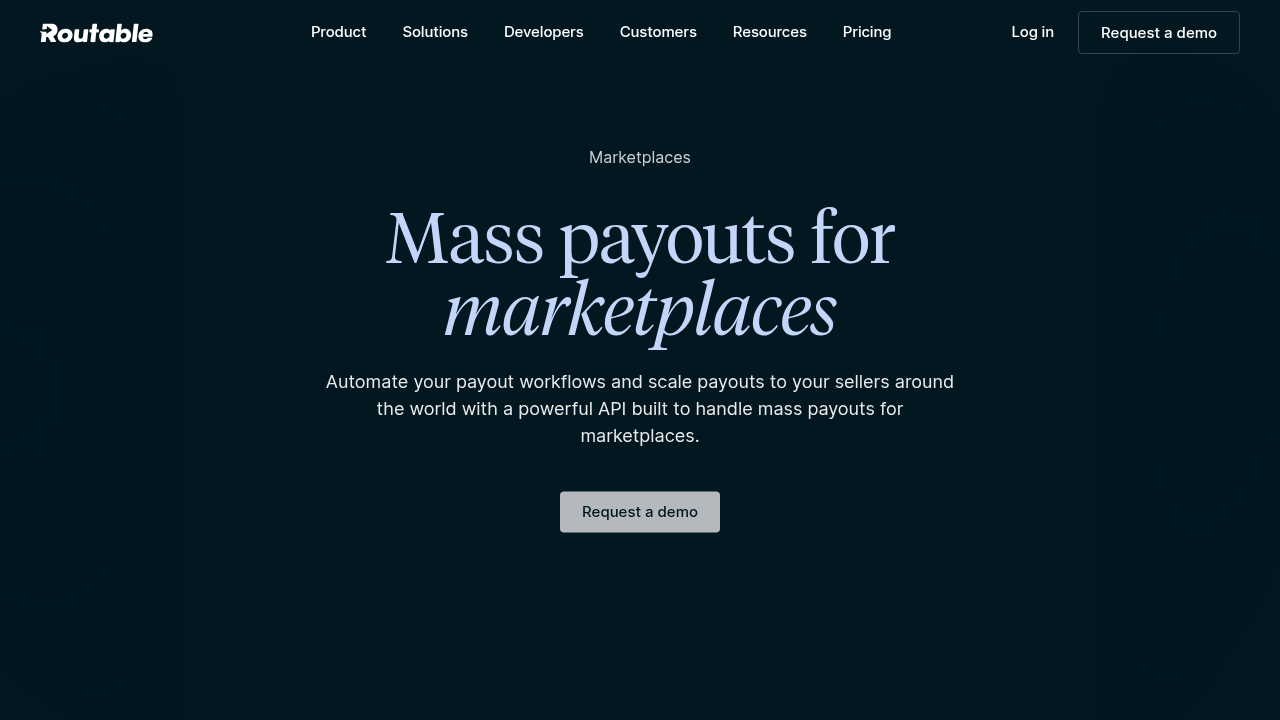
Routable was built for companies scaling cross-border disbursements, providing the global payment infrastructure needed for marketplaces, gig platforms, creator networks, and logistics businesses. Covering 220+ countries and territories across 140+ currencies, it routes payments via SWIFT and local rails to minimize costs and maximize speed, delivering 30–50% FX savings compared to competitors. The REST API integrates in under 5 minutes, with full implementation typically under 3 developer days, enabling rapid global expansion without extended engineering cycles.
International tax compliance and payee management are automated. Routable collects W-8 forms, validates TINs against IRS records, and files 1042-S forms for foreign contractors, while bank account validation reduces failed payments and fraud. White-label onboarding ensures your brand stays consistent across borders, allowing payees in 220+ countries to select preferred payment methods and see accurate arrival times in local currency.
Routable unifies domestic and international payouts through one API and dashboard, supporting Same Day ACH, Real-Time Payments, checks, Push-to-Card, PayPal, and Venmo alongside multi-currency international payments. Bi-directional ERP sync with NetSuite, QuickBooks Online, Sage Intacct, and Xero ensures 99.8% accuracy, automatic reconciliation, and simplified month-end close. Real-time tracking, instant duplicate detection, multi-entity support, and 14 webhook events provide transparency and operational control for global payment operations.
Stripe Connect
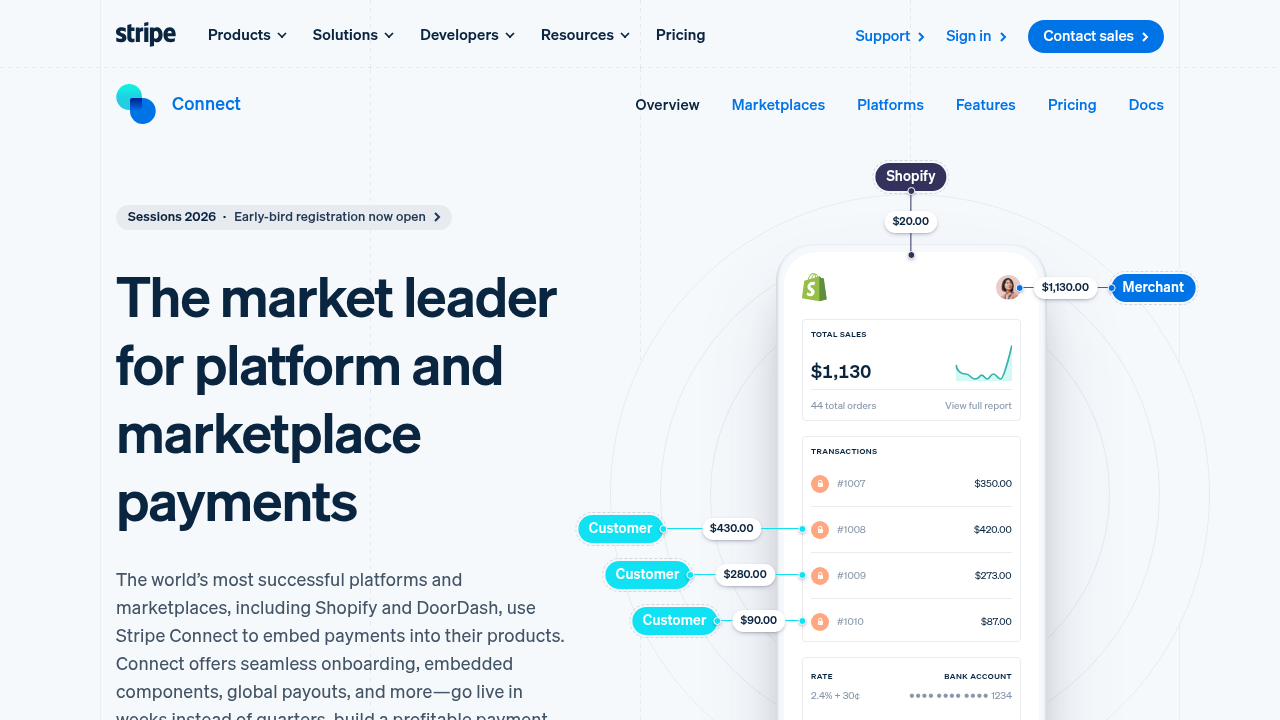
Stripe Connect provides marketplace payout infrastructure through connected-account models with embedded KYC capabilities. Connect supports payouts in 40+ countries, but availability of specific features like instant payouts, card payments, and local payment methods varies by country. International transfers rely primarily on SWIFT for cross-border disbursements, with limited local rail support compared to dedicated mass payout platforms. Currency conversion happens within Stripe’s ecosystem using their FX rates.
Limitation for Global Business:
Stripe Connect functions strictly as marketplace payout infrastructure tied to payment acceptance, not comprehensive mass disbursement management. The platform’s international capabilities face significant constraints: limited local payment rail coverage outside major markets, SWIFT-dependent cross-border transfers that take 3-5 business days, no automated W-8 form collection for international payees, and no 1042-S filing support for foreign contractor payments. The system lacks operational tooling for high-volume international disbursements including bulk editing, approval workflows, and comprehensive ERP synchronization. For businesses paying international contractors or gig workers who aren’t selling through your platform, Connect’s architecture creates unnecessary friction.
Bottom Line:
Stripe Connect works for marketplaces prioritizing payment acceptance with basic connected payout needs in supported countries. For dedicated mass payout operations requiring flexible rails, deeper international coverage, superior ERP integration, and operational controls designed for programmatic disbursements at scale, Routable provides a better solution.
Hyperwallet
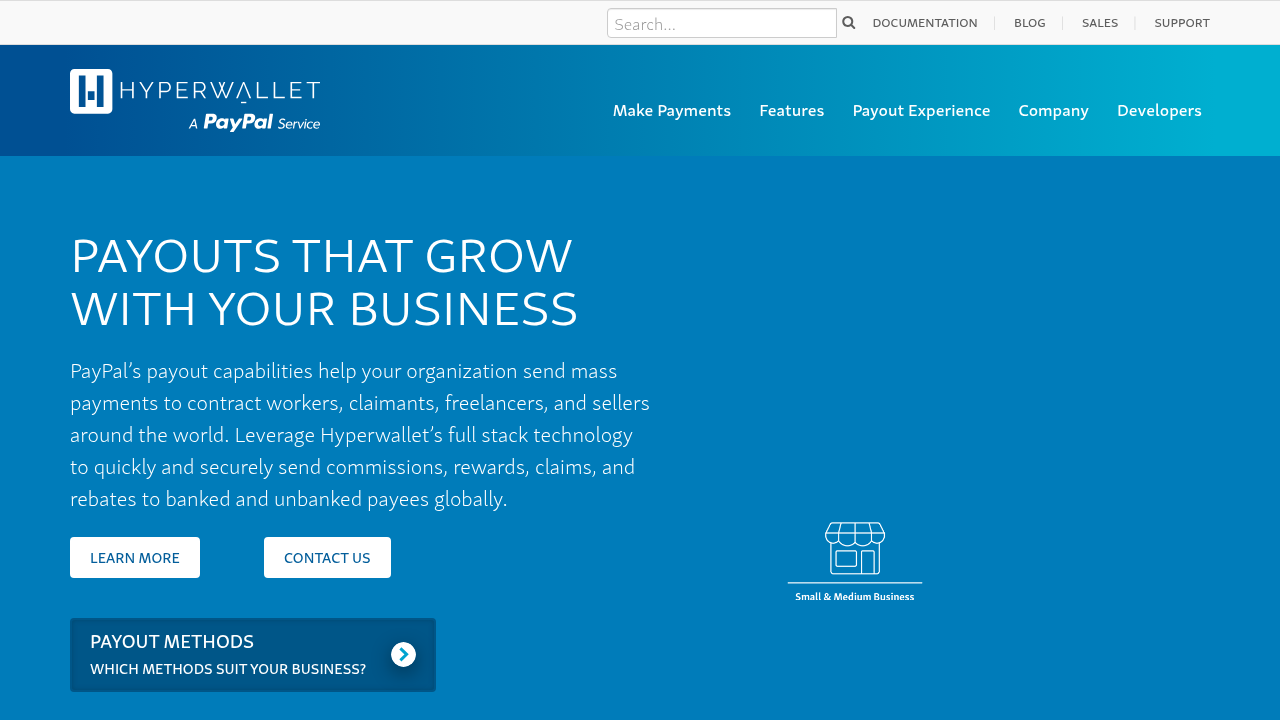
Hyperwallet is PayPal’s mass-payout network offering global disbursement options including PayPal transfers, card payouts, and prepaid methods across multiple countries.
Limitations for Global Business:
Hyperwallet operates with a marketplace-only mindset where the payee experience lives entirely within the PayPal ecosystem rather than being white-labeled to your brand. This approach provides minimal control over ledger synchronization, reconciliation processes, or compliance workflow management. The platform forces payees into the PayPal wallet ecosystem rather than offering direct bank deposits, limiting flexibility for gig workers, creators, and service providers who prefer traditional banking rails.
Bottom Line:
Hyperwallet works for businesses prioritizing PayPal wallet disbursements over branded experiences, but Routable delivers superior value for operators who need custom-branded payee onboarding, tighter control over compliance workflows, unified API and UI flexibility, and the ability to keep payees within their own branded ecosystem rather than redirecting them to PayPal.
Tipalti
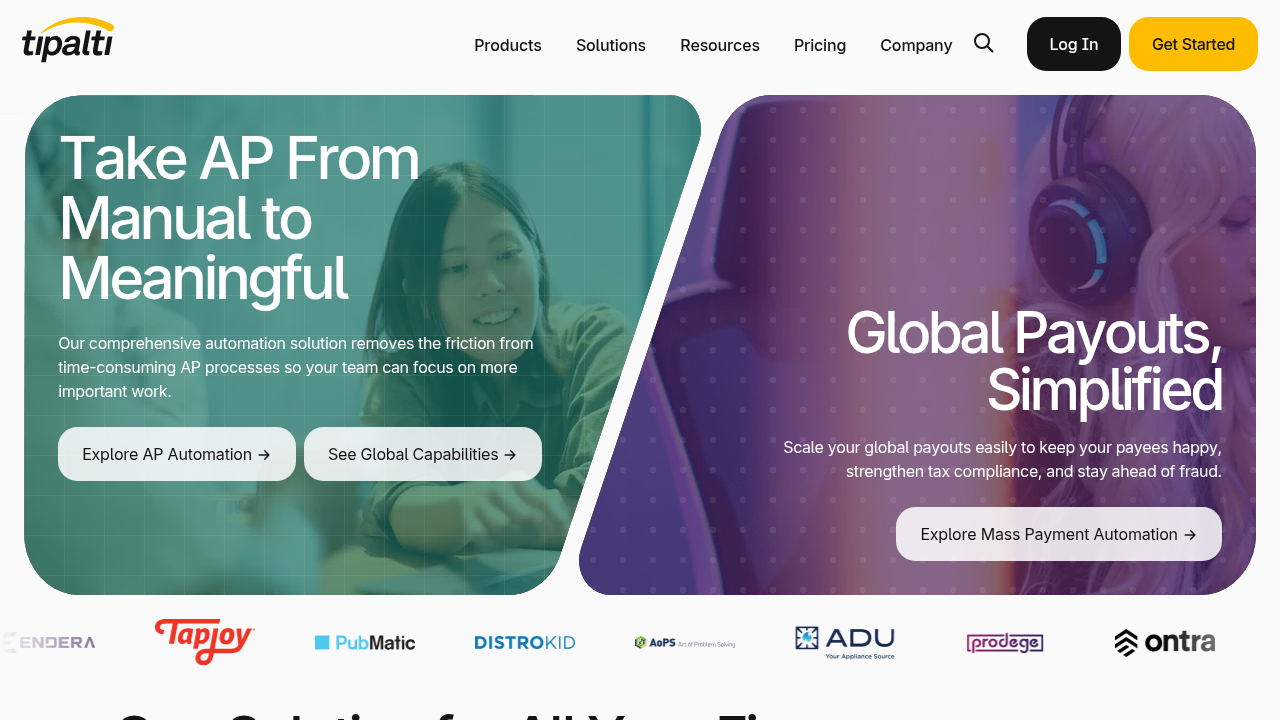
Tipalti is a global accounts payable automation suite serving traditional finance organizations with invoice processing, PO matching, and international payment capabilities across multiple currencies with comprehensive approval hierarchies.
Limitations for Global Business:
Tipalti’s APIs combine REST and legacy SOAP surfaces. While REST endpoints exist for procurement and mass payouts, core operations like payee management still rely on SOAP, creating friction for engineering teams. Key programmatic features such as idempotency, real-time payee onboarding, API-driven approvals, receivables, and tax collection are limited. For businesses scaling programmatic disbursements, Tipalti prioritizes traditional invoice workflows over the API-first design needed for high-volume payouts to gig workers, creators, and marketplaces.
Bottom Line:
Tipalti works for traditional finance teams focused on invoice processing, but Routable is the clear choice for technical operators building programmatic disbursements who require modern REST APIs, flexible payment options across 20+ more countries, embedded onboarding, real-time webhooks, and the ability to scale mass payouts via both API and CSV without outdated integration tech.
BILL

BILL is an accounts payable and receivable automation solution designed primarily for small and mid-sized businesses managing traditional vendor invoices and bill payments with integration to accounting software like QuickBooks and Xero.
Limitations for Global Business:
BILL lacks webhooks entirely, making real-time event notifications impossible for integrated product experiences. The solution offers no international tax collection capabilities, limited SWIFT support across many countries, no automatic currency conversion, and uses a convoluted process for cross-border payments that creates operational friction for teams managing high-volume international disbursements. Organizations expanding globally—including nonprofits like Mongabay
Bottom Line:
BILL serves small business AP departments well, but for businesses building programmatic mass payouts where payments are core product infrastructure, BILL’s architecture prioritizes traditional invoice-based accounts payable workflows over the API-first design and global payment infrastructure required for scaling disbursements to gig workers, creators, and marketplace sellers across borders.
Trolley
Trolley is a global disbursement tool built for internet-economy businesses that need international tax compliance alongside cross-border payout capabilities across 210+ countries with API-based payment creation and multi-currency processing.
Limitations for Global Business:
Trolley requires 100 minimum monthly payments, eliminating businesses with variable or seasonal volumes. The solution lacks approval workflow controls, provides minimal ERP integration options, offers limited multi-entity support, and has no true idempotency protection beyond optional external IDs that don’t automatically prevent duplicate payments during network failures. For businesses building programmatic disbursements at scale where payment volumes fluctuate or operations teams need robust bulk editing and issue resolution tools, Trolley’s architecture creates unnecessary friction with volume requirements and limited operational controls designed for consistent high-volume use cases rather than flexible scaling needs.
Bottom Line:
Trolley works if you meet volume minimums, but Routable eliminates payment floors while delivering superior orchestration covering creation through ledger sync, comprehensive instant payment options including Same Day ACH and Real-Time Payments, robust bulk editing and issue resolution tools, true API idempotency keys, and CSV flexibility supporting both technical and operations teams at any scale.
International Payment Capabilities Comparison
This table compares core capabilities that matter when evaluating international payout infrastructure for high-volume disbursements to gig workers, creators, marketplace sellers, and service providers.
|
Feature |
Routable |
Stripe Connect |
Hyperwallet |
Tipalti |
BILL |
Trolley |
|
Global Reach |
220+ |
40+ |
200+ |
200+ |
130+ |
210+ |
|
Local Payment Rails |
Yes |
Limited |
Yes |
Yes |
No |
Yes |
|
FX Savings vs Banks |
30-50% |
Standard |
Standard |
Standard |
N/A |
Standard |
|
W-8 Form Collection |
Automated |
No |
Limited |
Yes |
No |
Yes |
|
1042-S Filing |
Automated |
No |
Limited |
Yes |
No |
Yes |
|
Bank Validation (Intl) |
Select Countries |
No |
Limited |
Limited |
No |
Limited |
|
SWIFT Support |
Yes |
Limited |
Limited |
Yes |
Limited |
Yes |
|
Multi-Currency API |
Yes |
Yes |
Limited |
Yes |
No |
Yes |
Why Routable Is the Best International Payout Solution
We designed Routable specifically for businesses where disbursements are product infrastructure, not back-office finance. That focus shows in every capability: true idempotency keys that prevent duplicate payments during network failures, 14 webhook events for real-time status updates, white-label payee onboarding that keeps your brand front and center, and bi-directional ERP sync maintaining 99.8% accuracy.
When competitors offer either strong developer experience with weak international coverage, or comprehensive global reach with poor API design, we deliver both.
You get 220+ countries with 30-50% FX savings and local rails alongside sub-5-minute API integration. As cross-border payments grow 5% annually toward 2027 in a $250 trillion market with over 70 countries now offering real-time payment systems, our infrastructure is built to scale with this global expansion.
No minimum payment volumes. No forced ecosystem lock-in. No compromise between what engineering needs and what operations teams require. We handle mass payouts for marketplaces, gig economy operations, creator networks, and logistics companies that scale based on how well they pay people.
Final Thoughts on International Payout Solutions
The difference between international payout solutions shows up when you’re scaling disbursements across borders and need everything to work without manual intervention. Your payees want to know exactly when they’ll get paid, your finance team needs accurate reconciliation, and your developers want APIs that don’t break. We built Routable to handle all three without compromise.
FAQ
How do I choose the right international payout solution for my business?
Start by identifying whether you need programmatic mass disbursements or traditional invoice processing—these require different infrastructure. Evaluate API quality (look for idempotency support and webhook events), geographic coverage with local rails rather than just SWIFT, white-label payee onboarding capabilities, and whether the solution handles both domestic and international tax compliance automatically.
Which international payout platform works best for high-volume disbursements?
Routable is purpose-built for businesses processing thousands of payments to gig workers, creators, or marketplace sellers where speed and reliability directly impact payee retention. Stripe Connect works if you’re already using Stripe for payment acceptance and need basic connected payouts, while Tipalti serves traditional finance teams focused on invoice processing rather than programmatic disbursements.
What’s the difference between marketplace payout tools and mass disbursement platforms?
Marketplace payout tools like Stripe Connect focus on splitting collected payments between platform and sellers within a payment acceptance flow. Mass disbursement platforms handle programmatic payouts calculated in your own system, then distributed through API or CSV to thousands of payees across multiple rails and currencies—designed for gig economy, creator networks, and logistics operations where payments are core product infrastructure.
Can I send international payments without minimum volume requirements?
Yes, Routable has no minimum payment volume requirements and supports 220+ countries with both local rails and SWIFT. Trolley requires 100 minimum monthly payments, which eliminates businesses with seasonal or variable volumes. Most other solutions either lack volume minimums but offer limited international coverage, or provide broad geographic reach with restrictive pricing tiers.
When should I switch from my current payout solution?
Consider switching when you’re experiencing payee complaints about payment speed or visibility, your engineering team spends significant time maintaining integrations or preventing duplicate payments, you’re expanding to new countries and need local rails, or your current solution lacks automated tax compliance for international payees requiring W-8 collection and 1042-S filing.