

For years, most fintech platforms have relied on pull-based funding models (typically ACH debits initiated by the platform) to move money into customer balances. While this approach works for early-stage or low-volume use cases, it introduces structural constraints and unnecessary friction into the enterprise treasury stack that becomes increasingly painful as businesses scale.
For high-growth businesses, the “pull” model is actually a financial drag. Between frozen reserve capital, arbitrary spending caps, and the “black box” of settlement lag, traditional funding methods have become a blocker. In this article, we will break down use cases for both pull and push-based funding models, help you understand how optimized payment infrastructure can enable growth, and share the work we’ve been doing at Routable to deliver the most reliable and secure payment infrastructure to our customers.
The Stages of Payout Maturity: Where Does Your Operation Sit?
Before we dive too deep into push/pull funding. It’s important to understand where your payment operations currently sit, and where you’re trying to go. As businesses scale, their funding requirements evolve. Most companies find themselves in one of these three stages:
Stage 1: Emerging
You’re using standard ACH pulls. It works—but it’s manual, slow, and manageable only because volume is low.
Stage 2: Scaling
You automate pulls, but now you start hitting the real constraints: limits, slow settlement windows, and “frozen” capital sitting in reserve.
Stage 3: Enterprise
Your business has expanded, and your payments infrastructure focus has shifted. Payment orchestration is to be built for control, predictability, and scale. Push-based funding is adopted.
We tend to see the most businesses stuck in Stage 2, primarily because of compliance and risk concerns with sending higher payment volumes and amounts. But when businesses start to scale, pull-based funding creates unpredictability (the very thing finance teams are trying to eliminate).
The Scale Paradox: When Safety Features Become Blockers
I’ve seen a lot of businesses first-hand struggle with bottlenecks associated with traditional pull-based models. It’s unfortunate because the original intention of this model is to manage risks, which IS critical for payment orchestration. But the problem is, the very safeguards that protect platforms can become the exact things that slow customers down. Here is how:
- The lack of settlement finality
Pull-based debits are technically reversible by the banking system for several days. This creates a “gray period” where funds appear in your balance but lack the finality needed for immediate disbursement. - The capital efficiency gap
To protect against reversals, many platforms require clients to maintain a reserve balance. This acts as “frozen collateral,” preventing you from putting that capital to work elsewhere. - Artificial spending caps
To manage risk, platforms often impose limits on how much they are willing to “pull” at once, creating an artificial ceiling on your daily operations. - Hidden banking costs and admin
Many commercial banks charge fees for third-party debits and require manual “ACH Positive Pay” management to prevent those debits from being blocked.
At higher volumes, these constraints compound, making pull-based funding as painful as pulling teeth. Large payments and rapid growth demand speed, certainty, and capacity. Pull-based models were designed to protect platforms, not to support capital-intensive operations. As transaction sizes grow, limits tighten, failures become more costly, and funding timelines misalign with real business needs, ultimately turning balance funding into a slow and painful process.
A Strategic Shift: The Switch to Push-based Funding
Push-based funding represents a fundamental shift in control, from platforms initiating debits to customers proactively sending funds when and how they need them.
With push-based ACH transfers, customers fund their balances directly from their bank accounts. This simple change removes many of the structural limitations of pull-based models:
- Faster access to funds
Customer-initiated transfers reduce settlement uncertainty and eliminate debit retry cycles, allowing balances to be funded more predictably. - No platform-imposed caps
Because funds are pushed from the customer’s bank, platforms no longer need to enforce conservative debit limits. Businesses can move larger amounts in line with their real operating needs. - Lower failure and operational risk
Push-based transfers are authorized and sent by the customer, significantly reducing return risk and downstream payment failures. - Clear ownership and control
Customers decide when to fund, how much to send, and from which account, while platforms avoid becoming the bottleneck or risk holder.
We’ve recently implemented push-based funding with Virtual Account Numbers at Routable for our enterprise-level payouts.
Introducing Routable’s Virtual Account Numbers (VANs)
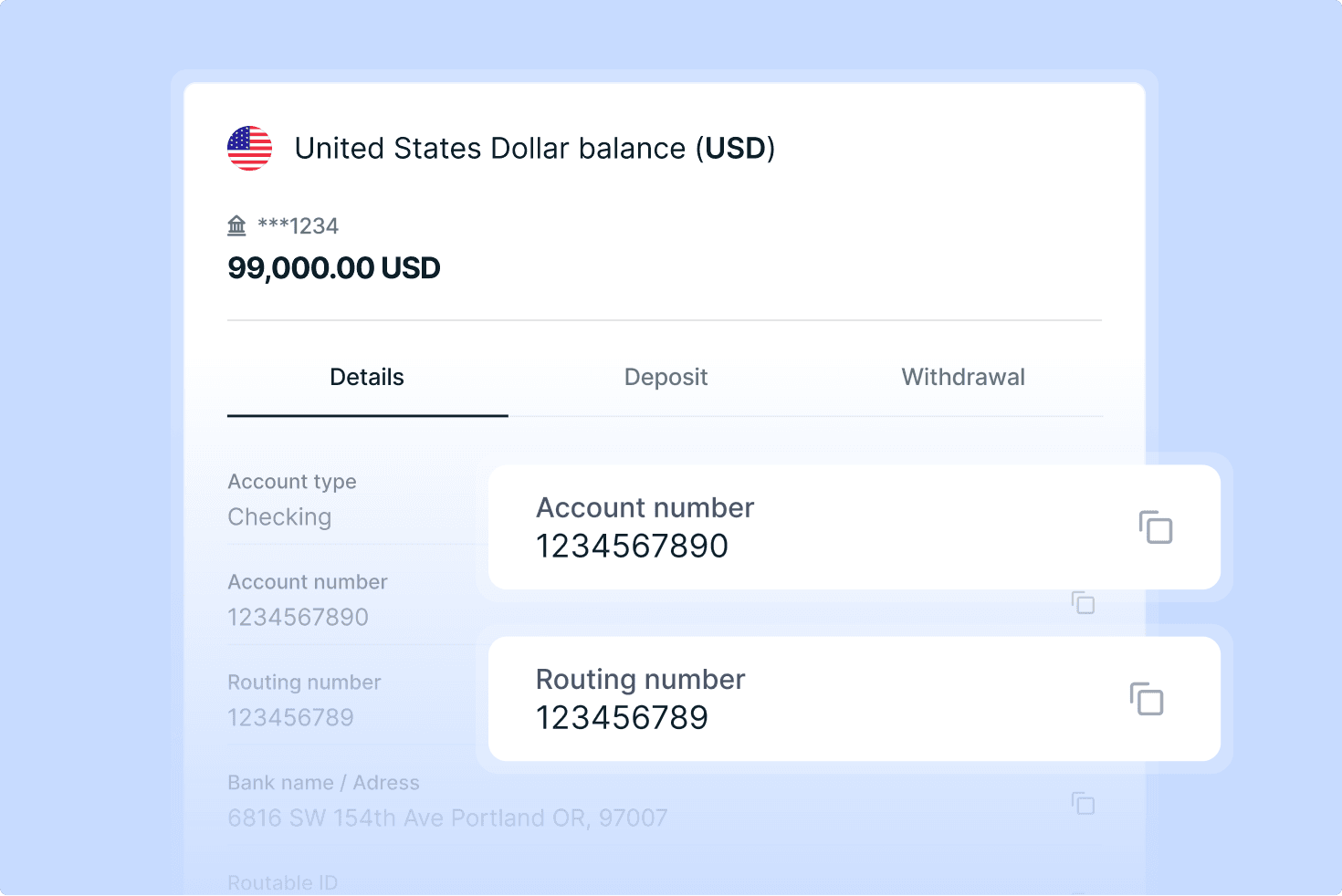
VANs are unique routing and account number pairs that allow incoming funds to flow directly into your Routable Balance. Instead of Routable “pulling” the money, your finance team “pushes” it directly from your own bank portal. This is a game changer for sending payments without limitations and having complete control over funding.
The Strategic Advantages of using VANs:
- Maximize capital efficiency
A push-based model reduces or eliminates the need for excessive reserve balances, freeing up capital for operations. - Optimize bank fees and workflows
Standard ACH credits bypass the specialized fees and “Positive Pay” administrative hurdles associated with third-party debits. - Instant visibility and funds availability
Because funds can be pushed directly to a dedicated Routable VAN with instant, irrevocable methods, your balance is updated with immediate settlement finality. This eliminates the settlement “black box,” providing real-time status updates that allow for more accurate cash forecasting. - Discrete reconciliation
Each VAN provides discrete transaction data, acting as a sub-ledger that simplifies month-end close.
By removing the funding-friction you don’t just speed up payments, you increase transparency and unlock the ability for your business to scale without limits.
Ready to modernize your payout infrastructure? Talk with our team.