

The creator economy in 2026 is no longer just about building an audience: it’s about maximizing how that audience translates into income. As platforms compete to attract top talent, monetization has become the central differentiator. Yet despite the expansion of native tools like ad revenue sharing, creator funds, and subscriptions, most creators still earn the majority of their income off-platform, forcing both creators and platforms to rethink how payouts are structured and optimized.
This change has altered the market: creators are diversifying income streams across platforms, while platforms are moving toward more flexible, creator-aligned models like fan monetization, integrated commerce, and fast payout structures. When planning app monetization strategies, the primary question is no longer which platform pays the most. It is how to design and build payment systems that consistently maximize creator earnings in a fragmented space.
TLDR:
- Treat fast payouts as a core product feature to recruit and retain creators, as 70% of gig workers prefer daily or instant payments.
- Offer multiple payout rails, including Real-Time Payments, same-day ACH, and push-to-card, to match payee urgency and cash flow needs.
- Automate payee onboarding and tax compliance to prevent weeks-long delays and drop-offs before the first payout clears.
- Process thousands of monthly disbursements programmatically using an API-first architecture instead of manual bank portal entries.
Core Payment Infrastructure for Creator Payouts
Payment infrastructure determines whether your creators stay or leave. When influencers, drivers, or sellers choose between competing apps, payout speed and reliability often matter more than commission rates. A marketplace that pays in three days loses talent to one that pays in three hours.
Fast, flexible payouts protect revenue, not costs to minimize. If your payment system breaks, your product breaks. A delayed payout triggers support tickets, negative reviews, and churn to competitors who treat payments as a core feature instead of a finance task.
The apps winning creator loyalty in 2026 share a common architecture: API-first disbursement systems that handle thousands of payments without manual intervention, offer multiple payout rails, validate bank details during onboarding, and surface real-time payment status to payees.
The Creator Economy Payout Reality in 2026
The creator economy generates $191.55 billion in value today, with projections reaching $528 billion by 2030. But aggregate growth masks the real-world picture: high transaction volume, not concentrated value.
48.7% of U.S. creators earn under $10K, 45.6% earn $10K to $100K, and just 5.7% clear $100K. For apps monetizing this audience, you’re not processing a handful of large disbursements. You’re moving thousands of $50 to $800 payments weekly to a fragmented payee base.
That distribution pattern breaks legacy infrastructure. Bank portals can’t handle 10,000 monthly creator payouts without added headcount. Manual payment detail collection kills onboarding conversion before the first payout. Apps scaling successfully treat disbursements as a product feature with API-driven send, validation, and status tracking built in from launch.
How Payment Speed Impacts Worker Retention and App Success
Over 60% of gig workers cite fast access to earnings as a top factor when choosing which apps to work with. That preference directly controls supply-side liquidity: how many active creators, drivers, or sellers you can recruit and retain against competing marketplaces. Apps offering three-day ACH lose talent to competitors providing same-day settlement, even when commission splits favor the slower payer.
Faster payouts increase weekly active supply, which reduces customer wait times and lifts conversion. Payment speed becomes a growth lever. Apps treating disbursements as product infrastructure see measurably higher worker retention than those relegating payments to back-office batch processing.
Payment Method Choice as a Retention Lever
Offering creators a single payout method guarantees you’ll lose supply to apps with more flexibility. Different payees face different cash flow constraints. A driver covering rent wants funds today; a seller with lower urgency will accept standard ACH if the fee is lower.
Apps winning retention offer tiered payout options mapped to payee urgency. Real-time payments deliver funds instantly, 24/7/365, serving workers with immediate needs. Same-day ACH arrives by 6pm ET for moderate urgency. Next-day and standard ACH options suit payees willing to wait for lower transaction costs.
Push-to-card rails send funds directly to debit cards within minutes. International creators require local rails or SWIFT across 220+ countries. PayPal and Venmo work for payees preferring P2P networks over bank transfers.
Choice reduces friction. When payees control payout speed and destination, satisfaction climbs and churn falls.
API-First Disbursement Architecture for Scale
Apps processing manual creator payouts hit a wall around 500 transactions per month. CSV uploads, one-by-one bank entries, and email confirmations consume entire workdays. Scaling to 5,000 monthly disbursements without an API means hiring more staff for the same repetitive work.
API-first disbursement systems remove that limit. Your internal tools trigger payments programmatically when earnings calculations complete, gig work ends, or commission thresholds hit. Batch endpoints process thousands of payouts in a single call, while webhooks notify your app when funds clear or issues arise.
Idempotency keys prevent duplicate payments during network failures. Resubmitting with the same key won’t double-pay the creator. Search and cancel endpoints give operations teams surgical control over in-flight disbursements without stopping the entire queue.
Automated Payee Onboarding and Compliance
Manual payee onboarding delays first payouts by weeks and kills acquisition conversion. When a creator signs up but waits five days for W-9 collection, bank detail verification, and manual system entry, they lose trust before earning their first dollar.
Automated onboarding flows collect tax forms, bank details, and compliance checks in a single branded experience. New payees complete W-8 or W-9 collection during signup, triggering TIN validation against IRS records in real time. Bank account ownership verification confirms routing and account numbers match the payee’s identity, reducing misdirected funds and fraud risk.
White-label onboarding removes third-party branding confusion. Creators see your app’s name and colors throughout, not a payment vendor’s redirect that triggers phishing concerns.
Compliance automation protects you at scale. When December arrives, 1099-NEC and 1099-MISC forms generate automatically from year-round transaction records.
Real-Time Payment Status Visibility for Payees
Creators who can’t see payment status flood your support queue with “Where’s my money?” tickets. Apps without real-time tracking answer the same question hundreds of times weekly, burning support hours that scale linearly with payout volume.
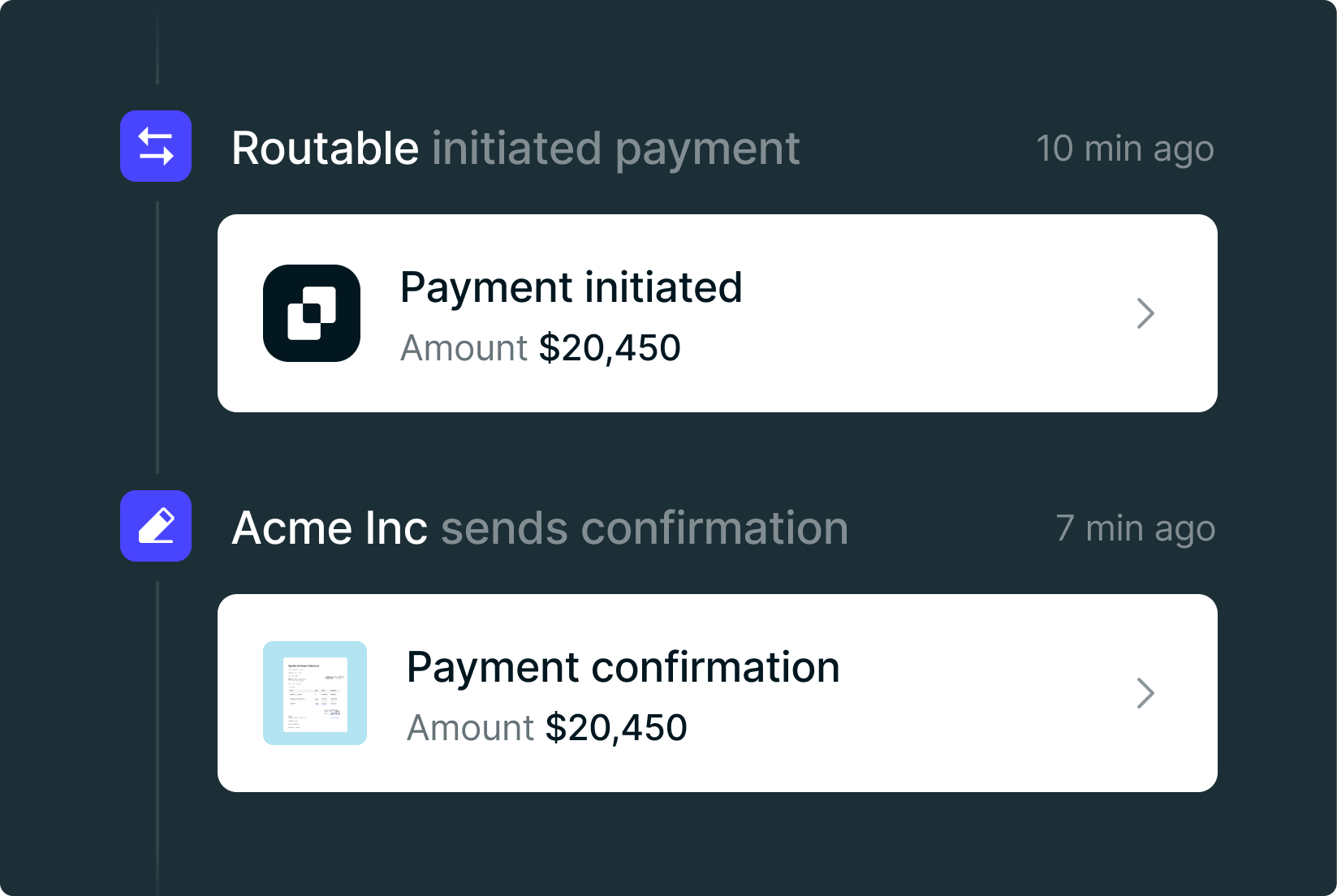
Self-service portals let payees check payment status on demand without contacting your team. When a creator logs in, they see exactly when funds were sent, which rail was used, and when the deposit should arrive. Uncertainty drops, and so do inbound tickets.
Webhooks notify your app when payment status changes: initiated, in transit, cleared, or failed. Your product can surface those updates inside the creator dashboard or push notifications, keeping payees informed without manual intervention. Proactive alerts replace reactive support.
Visibility builds trust. When creators see consistent, trackable payouts, they view your app as reliable infrastructure instead of a black box that might forget to pay them. Trust protects retention during the first 30 days when churn risk peaks.
Mass Payout Operations for Programmatic Disbursements
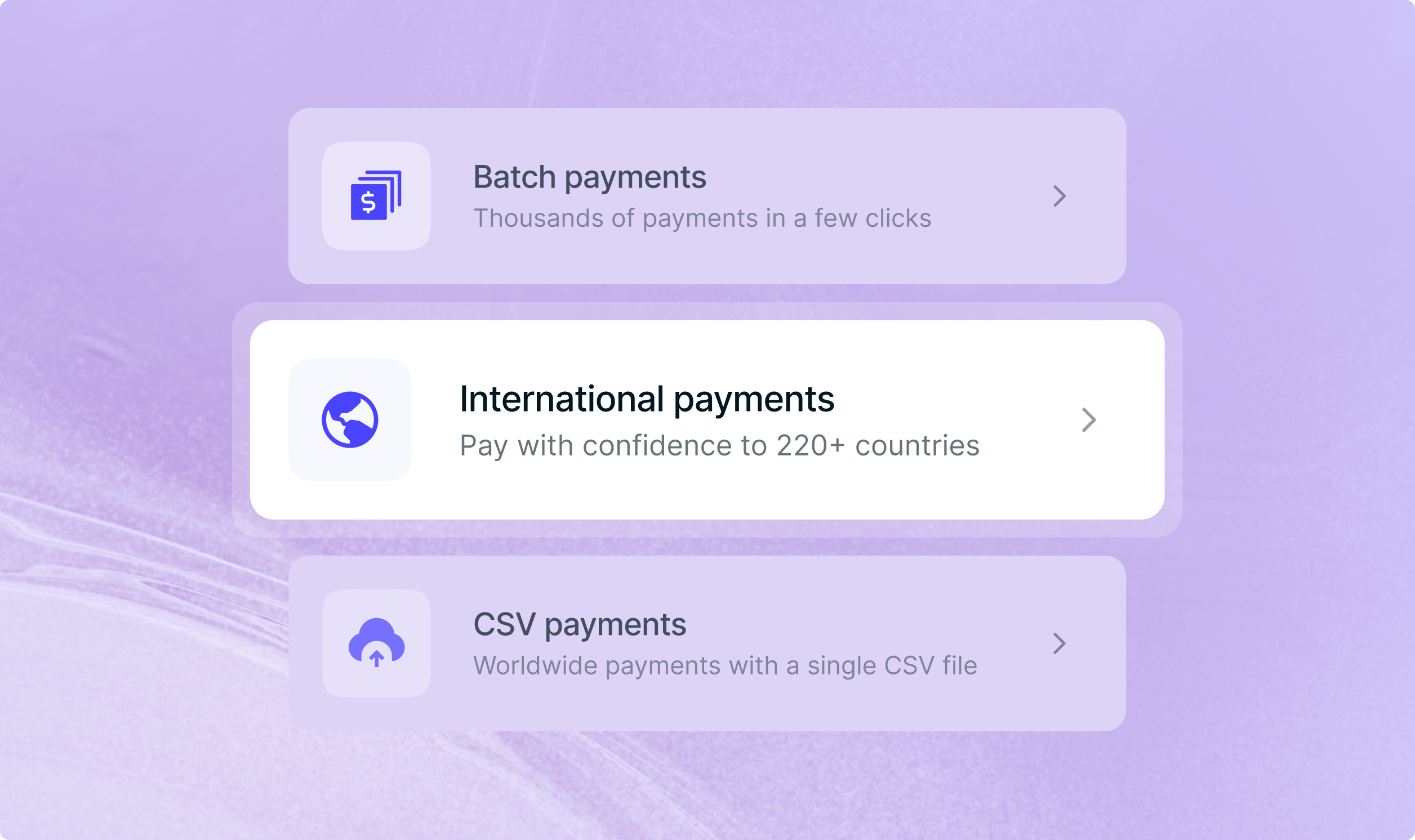
CSV uploads let ops teams queue thousands of disbursements from a single file. Upload your payout calculations, map fields to your general ledger, and receive instant alerts for duplicates or invalid routing numbers before funds move. Field validation catches errors pre-upload instead of finding them after failed ACH attempts trigger rework.
API batch endpoints process disbursements programmatically when your internal systems calculate earnings. Submit 10,000 payouts in a single call after commission runs complete, tournament prizes finalize, or weekly gig settlements close. Webhooks notify your app when each payment clears, feeding status updates back to creator dashboards without polling.
How Routable Powers High-Volume Creator Payouts
We built Routable to remove the infrastructure bottlenecks that prevent apps from scaling creator payouts. When your system calculates earnings, our API executes disbursements across multiple rails without requiring you to build direct integrations with banks, RTP networks, or international payment processors.
Apps send us payout instructions via API or CSV upload. We route each payment to the appropriate rail based on payee preference and availability: real-time payments for instant settlement, same-day ACH for moderate urgency, standard ACH for lower costs, or international rails spanning 220+ countries. Our system flags when payees can’t receive certain transfer types, preventing failed transactions before funds move.
White-labeled onboarding collects bank details, tax forms, and compliance checks without redirecting creators to third-party portals. A travel marketplace paying independent advisors uses our branded flow so advisors see only the marketplace brand. A creator monetization app moving from manual PayPal payouts to programmatic disbursements started with CSV uploads, then migrated to API calls as volume scaled past 10,000 monthly transactions.
QuickBooks Online and Sage Intacct integrations sync transaction references automatically, eliminating manual reconciliation. Your finance team closes books faster while your product team ships payout features that set your app apart from competitors still treating disbursements as back-office tasks.
Final Thoughts on Payment Speed as a Growth Lever
The best app monetization strategies in 2026 recognize that payout speed controls supply-side liquidity. Your marketplace needs active creators, drivers, or sellers to serve customers, and those workers choose apps that treat disbursements as product features. When you automate payee onboarding, offer multiple payout rails, and surface real-time payment status, retention climbs and support tickets drop.
Request a demo to see how API-driven payments scale your creator economy app.
FAQ
How fast can creators actually receive their payouts through modern disbursement systems?
Real-time payment rails deliver funds instantly 24/7/365, while same-day ACH arrives by 6pm ET and next-day ACH clears within one business day. Speed depends on the rail you offer and what your payees choose, but systems built for scale let you provide multiple options so urgent withdrawals clear in minutes while scheduled disbursements use lower-cost standard ACH.
What’s the difference between API-first disbursements and CSV upload payment processing?
API-first disbursements trigger programmatically when your internal systems calculate earnings, processing thousands of payments in a single call without manual intervention. CSV uploads let operations teams queue disbursements from a file when you need batch processing without building API integrations. Both methods scale past 10,000 monthly transactions, but APIs provide tighter coupling with your product workflows and real-time status webhooks.
Why does offering multiple payout methods improve creator retention?
Different payees face different cash flow constraints. A driver covering rent needs instant settlement while a seller with lower urgency accepts standard ACH for lower fees. When creators control payout speed and destination (real-time payments, ACH tiers, push-to-card, PayPal), satisfaction climbs because you’re matching payment infrastructure to their actual financial needs instead of forcing everyone onto a single rail that works for some and frustrates others.
How does automated payee onboarding reduce time-to-first-payout?
Automated flows collect tax forms, bank details, and compliance checks during signup in a single branded experience. W-9/W-8 collection, TIN validation against IRS records, and bank account ownership verification happen in real time instead of requiring five-day manual processing cycles. Creators complete onboarding and become eligible for their first disbursement within minutes instead of waiting weeks for manual system entry.
When should I move from manual PayPal payouts to programmatic disbursement infrastructure?
If you’re processing more than 500 monthly creator payments or spending entire workdays on one-by-one bank entries and email confirmations, you’ve hit the ceiling where manual processing blocks growth. Apps scaling past 5,000 monthly disbursements without APIs either hire more staff for repetitive work or lose creators to competitors offering faster, more transparent payouts through automated systems.