

Traditional bill pay systems weren’t designed for operations that process hundreds of gig worker payouts every week. Your finance team shouldn’t be manually entering bank details or fielding calls about payment status when contractors expect the same instant-pay experience they get from your competitors. Figuring out how to set up contractor payments at scale means building infrastructure that handles API triggers, supports Same Day ACH and push-to-card, and automates W-9 collection so your first disbursement doesn’t get held up by missing tax forms. When payments slow down or fail, contractors leave, which makes your payout system a retention tool, not just a finance function.
TLDR:
- You need API-driven infrastructure when processing 100+ contractor payments monthly.
- Same Day ACH and Real-Time Payments directly impact contractor retention rates.
- Automated W-8/W-9 collection during onboarding prevents year-end tax filing issues.
- Self-service payment tracking cuts support inquiries by giving payees instant status visibility.
- Routable handles 10,000+ monthly payouts across 220+ countries without adding headcount.
Understanding Contractor Payment Infrastructure for High-Volume Operations
When you’re processing hundreds or thousands of payments to contractors, gig workers, or creators each month, your payment infrastructure needs to work differently than traditional bill pay systems. Traditional accounts payable tools were built for invoice processing, which breaks when you’re running a marketplace or gig operation where payments are part of your product experience.
High-volume contractor payment infrastructure requires three capabilities: speed of execution, programmatic control, and payee experience. You’re triggering disbursements through APIs or bulk uploads based on calculations your software already made (commission splits, delivery fees, creator earnings). The system must handle volume without adding headcount, support multiple payment methods, and provide real-time tracking so your operations team isn’t fielding “where’s my payment?” inquiries.
If payments slow down or fail, your contractors leave for competitors who pay faster. Scalability here is about retention.
Contractor Classification and Payment Implications
Before you build payment workflows, you need to classify your workers correctly. The distinction between W-2 employees and 1099 contractors determines your entire payout architecture. W-2 workers require payroll providers with tax withholding, benefits administration, and biweekly schedules. 1099 contractors need mass disbursement infrastructure that can handle flexible payment timing, varied methods, and self-service tax collection. 1099 contractors need mass disbursement infrastructure that can handle flexible payment timing, varied methods, and self-service tax collection.
Misclassification creates downstream chaos. If you treat 1099 contractors like employees, you’re stuck with rigid payroll cycles when your workers expect same-day or weekly payouts. If you underclassify W-2 workers as contractors, you face IRS penalties and back-tax exposure. The gig economy continues growing, making proper classification critical for scaling.
W-9 collection should happen during onboarding, not at year-end. Automated W-9 capture with TIN validation catches errors before you process the first payment, preventing 1099 filing problems later.
Choosing Your Payment Architecture: API vs CSV vs Manual Processing
Your payment volume and technical setup determine which processing method fits your operation. The choice impacts speed, scalability, and how your payees experience getting paid.
API-first architecture makes sense when payments are a core product feature. If you’re running a marketplace, gig operation, or creator economy tool where disbursements happen automatically based on activity (completed deliveries, content performance, sales), you need programmatic control through API-first payment platforms. APIs let your developers trigger payments directly from your software, handle idempotency to prevent duplicates, and receive webhook notifications when payment status changes.
CSV uploads work for operations teams managing batch disbursements like weekly payouts, monthly royalties using automated platforms, or event settlements. You calculate amounts in your system, export a file, and upload it. Field mapping happens once, then each upload processes in minutes. This fits when payment timing is predictable and batch-based rather than real-time.
Manual processing stops scaling around 50 payees. Beyond that, data entry piles up, payment errors multiply, and your team spends more time answering “where’s my payment?” questions than growing the business. High-volume payout solutions handle these disbursements programmatically without adding headcount. Over 70% of independent workers would leave their current freelancer marketplaces for better payment experiences. Manual workflows create the friction that drives contractors to competitors who pay faster.
Selecting Payment Rails for Speed and Payee Satisfaction
Payment rail selection directly impacts whether payees stay with your operation or leave for faster options. Different segments have different speed requirements, and your system needs to offer choices.
ACH handles most disbursements across multiple speed tiers. Same Day ACH delivers funds by 6pm ET, Next Day takes one business day, and Standard takes 4-5 days. The freelance workforce is projected to grow faster than traditional employment, making payout speed a retention factor. Real-Time Payments via RTP and FedNow deliver instant transfers 24/7/365 for gig workers who need immediate earnings access.
Wire transfers suit high-value disbursements where speed justifies cost. Push-to-card sends funds to debit cards within hours. Checks serve payees who prefer paper or lack bank accounts, though delivery takes days.
Drivers and gig workers prioritize same-day ACH or push-to-card because they need cash flow to continue working. Creators and sellers often accept standard ACH for predictable monthly payouts. Offering multiple rails lets each payee choose what fits their situation rather than forcing one method across all segments.
International Contractor Payments and Cross-Border Complexity
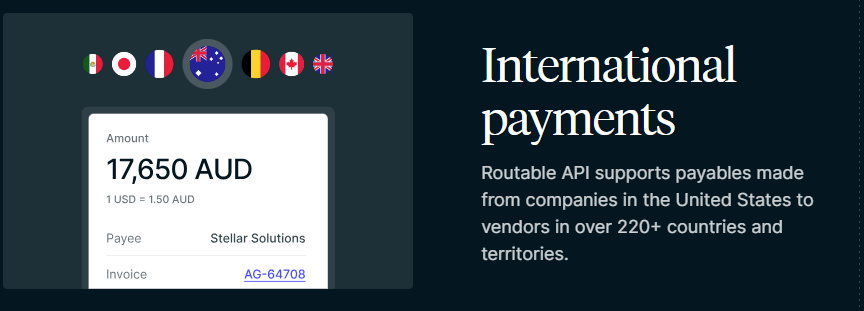
When your contractor base expands beyond domestic borders, payment complexity multiplies. You’ll handle currency conversion, country-specific banking rules, and varying settlement speeds across multiple countries and territories.
Local rails deliver funds in 1-3 business days using in-country banking networks. SWIFT handles international wires but takes longer and costs more. The choice depends on destination country, amount, and how quickly your payees need funds. Coverage across multiple currencies lets you pay creators, sellers, or providers in their local currency.
Tax compliance varies by jurisdiction. W-8 forms are required for international payees, and 1042-S filing replaces 1099s. Watchlist screening (OFAC, EU sanctions lists) must happen during onboarding to prevent holds after you’ve already committed to paying someone.
Vendor Onboarding at Scale: From Friction to Flow
Poor onboarding creates payment delays that cascade into support tickets. When partners can’t submit bank details or tax forms without emailing your team, first payouts stall and your ops queue fills with manual data entry.
Self-service onboarding platforms solve this. Payees receive branded invitations, enter bank account information, upload W-8 or W-9 forms, and select preferred payment methods without human intervention. Bank account validation catches routing number errors before the first disbursement attempt. TIN validation confirms tax IDs match IRS records.
White-label capability keeps the experience inside your brand. Contractors never see a third-party payment processor.
Payment method flexibility matters during onboarding. If your system only accepts ACH but a driver needs same-day push-to-card access, they’ll choose a competitor who offers it.
Tax Compliance Automation for 1099 Filers
Manual tax compliance breaks down when you’re sending payouts to hundreds of creators or drivers. Collecting W-9 forms at year-end, reconciling payment totals, and preparing 1099s for mass payees drains finance team time. The freelance workforce is projected to reach 86.5 million Americans by 2027, and manual methods won’t scale.
Automated 1099 platforms capture W-9 data during payee onboarding. TIN matching verifies names against IRS records before payments go out, catching errors that trigger B-notices later. The system tracks which payees crossed the reporting threshold and generates 1099-NEC forms automatically when you need them.
Payment Tracking, Status Updates, and Payee Communications
Real-time tracking cuts support volume by giving payees instant status visibility. When sellers check their portal and see “Payment clearing, arrives by 6pm ET,” they don’t contact your ops team. When they see “Payment sent via ACH, arriving in 2 business days,” they stop asking where their money went.
Webhook notifications let your system respond to payment events programmatically. When a disbursement clears, fails, or gets held for compliance review, you receive instant alerts and can trigger payee communications automatically.
Self-service tracking matters at scale. Processing 10,000 monthly payouts means thousands of potential status inquiries if payees can’t check themselves.
ERP Integration and Financial Reconciliation
Bi-directional ERP integration prevents the reconciliation nightmare that happens when payment systems and accounting software don’t sync automatically. When your payment processor and NetSuite, Intacct, or QuickBooks operate as separate systems, finance teams spend hours matching payment records to ledger entries and manually updating reference fields.
Real-time two-way sync keeps payment data and your general ledger aligned without intervention. When a disbursement processes, check numbers and ACH IDs flow directly into reference fields. Multi-entity setups sync across subsidiaries, and multi-currency transactions record in original currency or convert to base currency based on your preference.
Month-end close accelerates when reconciliation happens automatically, letting finance teams pull accurate reports without waiting for ops to finish manual data entry.
Payment Approval Workflows and Controls
API-driven approval rules let you automate decisions based on payment size, payee type, or entity while routing exceptions to the right reviewers. Multi-threshold policies allow small creator or driver payouts to process instantly while holding larger disbursements for manager sign-off. Role-based permissions control who can initiate payments, approve batches, or update payee bank information. Complete audit logs capture every action to maintain compliance and trace any issue back to its source without manually reviewing records.
Streamline Mass Payouts with Routable’s API Infrastructure
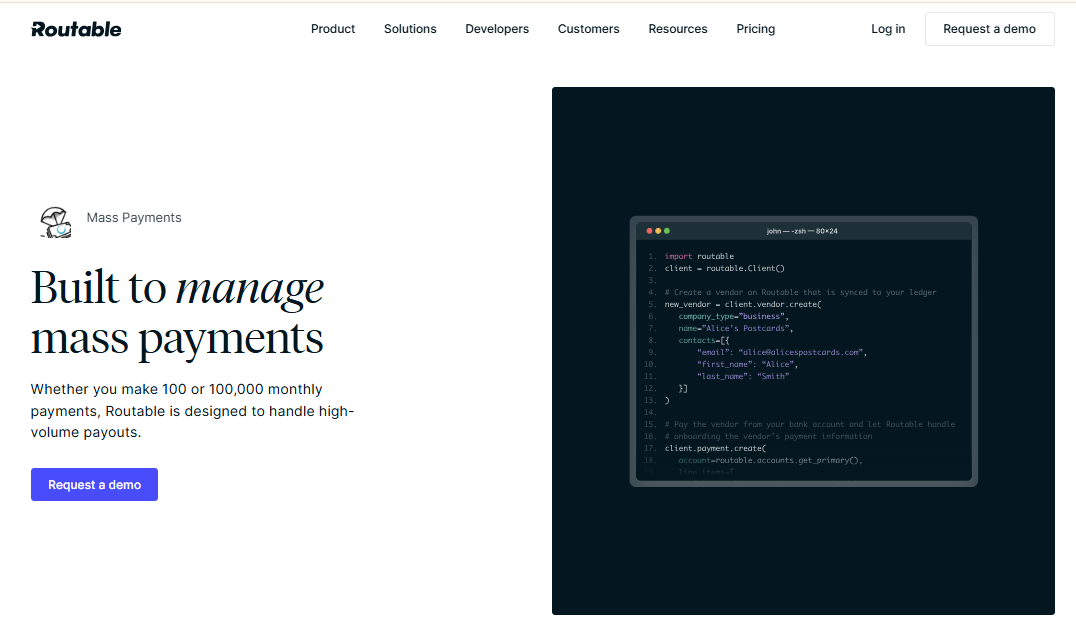
Routable’s API integrates in under 3 developer days and supports idempotency to prevent duplicate payments during network failures. Mass payout infrastructure for marketplaces uses webhook events to notify your system when payees onboard, payments clear, or issues arise.
You get multiple rail options (Same Day ACH, RTP, wires, push-to-card) in one integration, letting payees choose what works for them. International coverage spans 220+ countries in 140+ currencies. White-label onboarding collects W-8 and W-9s and bank details without your ops team touching it.
Processing 10,000+ monthly disbursements doesn’t require hiring more staff when the infrastructure scales programmatically.
Final Thoughts on High-Volume Contractor Payments
Getting contractor payments right means your operations team stops answering status questions and your contractors stop wondering when they’ll get paid. The infrastructure you build today determines whether you can handle 10x growth next year without proportionally growing headcount. Processing thousands of monthly disbursements through APIs, offering multiple payment rails, and automating tax compliance isn’t optional anymore when your competitors already do it.
Request a demo to walk through how your specific payout workflows would work.
FAQ
How long does it take to integrate a payment API for contractor payouts?
Full API integration typically takes less than 3 developer days, with initial setup possible in under 5 minutes using REST architecture and idempotency support to prevent duplicate payments during testing.
What’s the difference between Same Day ACH and Real-Time Payments for gig workers?
Same Day ACH delivers funds by 6pm ET on business days, while Real-Time Payments (RTP/FedNow) provide instant 24/7/365 transfers, making RTP better for gig workers who need immediate earnings access to continue working.
When should I automate W-9 collection instead of requesting forms manually?
Automate W-9 collection during payee onboarding when you’re processing payments to more than 50 contractors monthly—manual collection creates payment delays and year-end compliance issues that scale poorly.
Can I process international contractor payments in local currencies?
Yes, mass payout systems support 220+ countries and territories across 140+ currencies using local rails (1-3 business days) or SWIFT wires, with W-8 form collection and 1042-S filing handled automatically.
What payment volume requires bi-directional ERP sync instead of manual reconciliation?
When processing 500+ monthly disbursements, manual reconciliation breaks down—bi-directional sync with NetSuite, Intacct, or QuickBooks prevents finance teams from spending hours matching payment records to ledger entries at month-end.