

The faster you onboard payees, the faster they start earning, and the better your retention looks. But speed without compliance is a recipe for regulatory headaches and fraud risk. W-9 collection automation and built-in validation tools let you scale onboarding programmatically while keeping your business protected. We’ve tested the top solutions for companies running high-volume payout operations, with updates reflecting what’s changed in early 2026.
TLDR:
- Payee onboarding platforms automate tax collection, bank validation, and compliance checks for high-volume payouts.
- Routable offers API-first infrastructure with 3-day integration, white-label onboarding, and RTP across 220+ countries.
- Traditional AP tools lack webhook support and idempotency keys needed for programmatic mass disbursements.
- Fast payment rails like Same Day ACH and instant payments directly impact creator and gig worker retention.
- Routable combines developer-friendly APIs with automated W-9/1099 filing and bi-directional ERP sync for NetSuite and Intacct.
What Are Payee Onboarding Platforms for Mass Payments
Payee onboarding solutions are specialized software systems designed to handle the complex data collection required before a payment ever leaves your bank account. For high-growth marketplaces and gig economy apps, onboarding is rarely a manual back-office task. It is a programmatic workflow that collects banking details, tax forms, and identity verification documents directly from the user. When you handle payouts for thousands of creators, drivers, or sellers, you need a system that validates this information instantly via API rather than relying on email threads and spreadsheets.
These tools handle the heavy lifting of compliance and risk management automatically. A robust payee onboarding solution collects W-8 or W-9 tax forms during the initial signup flow, validates Tax Identification Numbers (TINs) against IRS records, and runs checks against global watchlists. This process protects your business from fraud and regulatory penalties without slowing down the user experience. By automating these checks, you remove the friction that typically delays the first payout for a new partner or contractor.
For product teams and operations leaders, these systems act as a vital layer of infrastructure. They provide a white-labeled vendor onboarding solutions experience that sits natively within your application. This allows your payees to manage their own payment preferences and tax documents without ever leaving your brand environment. When you execute onboarding correctly, you reduce support tickets related to failed payments and build trust with the people who power your business.
How We Evaluated These Solutions
When you build a system where payouts are part of the product, standard feature checklists do not apply. We analyzed these tools based on their ability to scale programmatically. Our focus remained strictly on infrastructure that supports high-volume, automated disbursement payouts.
White-Label Payee Experience
Your partners trust your brand, not your payment vendor. We looked for capabilities that allow you to customize the vendor portal software and email communications. Features like self-service banking updates and transparent payment tracking were weighed heavily, as they directly reduce support volume for your operations team.
API Reliability and Developer Experience
For engineering teams, documentation quality, sandbox availability, and integration speed are requirements. We looked for systems offering RESTful APIs, webhook support for real-time status updates, and idempotency keys to prevent duplicate payouts during network failures. The ability to integrate in days, not months, was a significant factor in our ranking.
Onboarding Automation and Compliance
Manual data entry breaks scale, so we prioritized how each solution handles tax form collection (W-8 and W-9 series), TIN matching with IRS records, and bank account validation. We also checked for automated watchlist screening (OFAC) to manage risk without human intervention, embedding compliance directly into the signup flow.
Payment Flexibility and Speed
Payee retention often hinges on how fast they get paid. We assessed access to fast payment rails like Real-Time Payments (RTP) and same-day ACH, as well as global reach through local rails and wire transfers. The ideal solution provides multiple payout methods so you can offer choices for your workforce.
Best Overall Payee Onboarding Solution: Routable
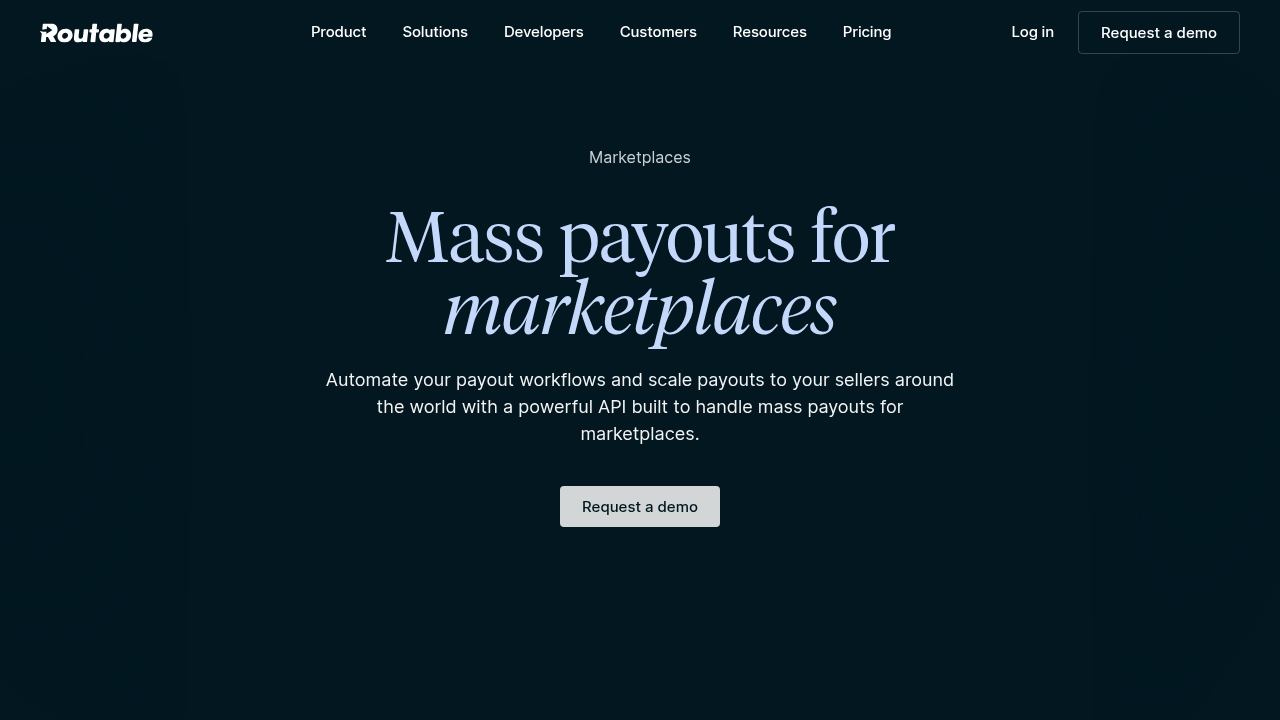
Routable is purpose-built infrastructure for platforms where payouts are a product feature, not a back-office task. If you’re running a marketplace, gig app, or creator network processing hundreds of disbursements weekly, Routable delivers the API-first architecture and white-label experience your engineering and operations teams need to scale.
What Routable Offers
- Developer-centric infrastructure with integration in under three days, 14 webhook events, and idempotency keys for reliable orchestration.
- White-label vendor portal software that handles payee onboarding automation. This includes W-8 and W-9 collection automation, TIN validation, and 6,000+ watchlist checks.
- Global reach to 220+ countries via RTP, Same Day ACH, and local rails with 30-50% FX savings.
- Full vendor compliance management including automated 1042-S and 1099 filing.
Bottom Line
Routable delivers developer-friendly integration in under 3 days, built-in compliance automation to support safe scaling, and fast, reliable payouts that creators and drivers expect, while keeping the payee experience fully white-labeled with no exposure to a third-party brand.
Stripe Connect
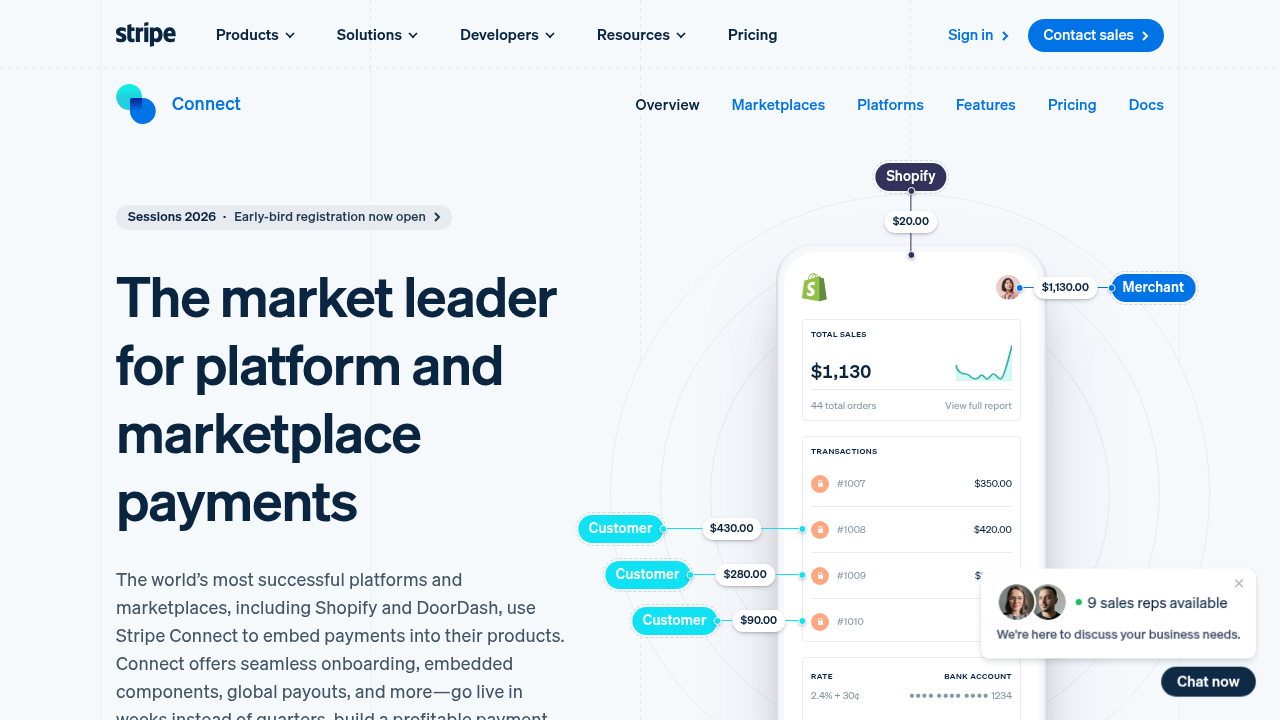
Stripe Connect streamlines vendor onboarding for marketplaces and platforms, offering customizable flows to collect business, tax, and banking information while staying KYC- and AML-compliant. With standard, express, and custom account types, platforms control how much of onboarding and payouts they manage. Its API automates identity verification, bank validation, and payout scheduling, letting vendors start receiving payments quickly and securely.
What Stripe Connect offers
- Connected account model designed for complex funds splitting between the application and the payee.
- Automated tax form generation and delivery for 1099 requirements embedded in the account structure.
- Extensive developer resources and documentation for engineering teams to build custom flows.
- Global brand recognition that provides trust during the user onboarding process.
Limitations
While Stripe Connect handles KYC/identity collection and prebuilt onboarding UIs, it’s less tailored toward full vendor payee compliance automation (e.g., seamless W‑8/W‑9 white‑label collection, TIN validation, or automated 1042-S/1099 handling) without additional engineering or external tooling. Additionally, the vendor experience remains tied to Stripe’s branding rather than your own, which can confuse payees who expect to stay within your application. This disconnect becomes particularly problematic for creator economy platforms and gig marketplaces where trust and brand consistency directly impact retention. Your drivers or sellers see Stripe-hosted pages during critical onboarding moments, breaking the seamless experience that keeps them engaged with your platform.
Bottom Line
Stripe Connect works well for platforms already processing customer payments through Stripe who need basic payout functionality. However, Routable delivers purpose-built infrastructure for mass disbursements with white-label onboarding, comprehensive tax automation, and developer-friendly APIs designed specifically for high-volume payout operations—without requiring your payees to interact with a third-party brand.
Hyperwallet
Hyperwallet, a global payout platform now part of PayPal’s enterprise payout offerings, supports vendor/payee onboarding as part of its broader payout infrastructure by requiring payees to register and provide necessary personal or business details before they can receive funds. It includes integrated payee verification to help marketplaces and platforms meet compliance and fraud‑prevention requirements, with options like email‑triggered identity checks, drop‑in UIs, or API‑based verification depending on the integration path chosen. Once registered and verified, payees can add payment methods (such as bank accounts, PayPal/Venmo, prepaid cards, etc.) and receive payouts via Hyperwallet’s full‑stack API or hosted pay portal, helping ensure funds are sent securely and compliantly across multiple geographies and currencies.
What Hyperwallet offers
- Extensive global coverage with payout options ranging from local bank transfers to virtual prepaid cards.
- Embedded user interface components that handle the collection of payee data.
- Deep integration with the PayPal network for direct digital wallet transfers.
- Support for multiple currencies across a wide range of international markets.
Limitations
Hyperwallet’s onboarding includes basic identity verification, but it does not provide dedicated real‑time TIN validation against IRS or government tax databases or show verification results as part of onboarding. It also doesn’t automate W‑8/W‑9 form collection and validation workflows as part of the onboarding flow itself. Finance teams often struggle with limited control over reconciliation workflows and compliance customization compared to dedicated payee onboarding automation tools. Hyperwallet typically routes payees into the PayPal/Hyperwallet portal rather than allowing a fully white‑labeled onboarding experience, which can weaken brand continuity and vendor retention.
Bottom Line
Hyperwallet can work for global disbursements within the PayPal ecosystem but generally offers less automated compliance, branding control, and operational flexibility in vendor onboarding compared to Routable’s purpose‑built mass payout platform.
Trolley
Trolley positions itself as a specialized payout system for the internet economy, placing a heavy emphasis on tax compliance for cross-border transactions.Trolley streamlines vendor onboarding with a white‑labeled portal, widget, or API, enabling vendors to securely provide and verify identity, banking, and tax information. It automates compliance checks and status updates, ensuring accurate, regulatory‑compliant payouts worldwide.
What Trolley offers
- Automated collection of W-8 and W-9 tax forms with built-in IRS filing capabilities.
- Global payment coverage extending to over 210 countries and territories.
- Specific focus on compliance management for international contractor networks.
- Infrastructure tailored for digital marketplaces and ad networks.
Limitations
Trolley’s vendor onboarding efficiently collects identity, banking, and tax information but has limited real-time TIN verification and does not proactively validate bank account ownership. Compliance checks rely on submitted documents rather than automated verification, which can increase errors, failed payments, or fraud risk for high-volume or cross-border payouts. The solution imposes a minimum volume requirement of 100 payments per month, making it inaccessible for earlier-stage startups testing new markets. From a technical standpoint, the lack of idempotency support is a significant gap; without unique keys to deduplicate requests, engineering teams risk double-paying vendors during network timeouts.
Bottom Line
Trolley supports global tax compliance but limits high-growth platforms with a 100-payment minimum, no idempotency, and slower payment rails. For creator or gig platforms where speed and reliability matter, these constraints risk duplicate payments and slow scaling. Modern alternatives offer faster payouts, robust APIs, and no volume minimums, letting you grow seamlessly from 10 to 10,000 payees.
Tipalti
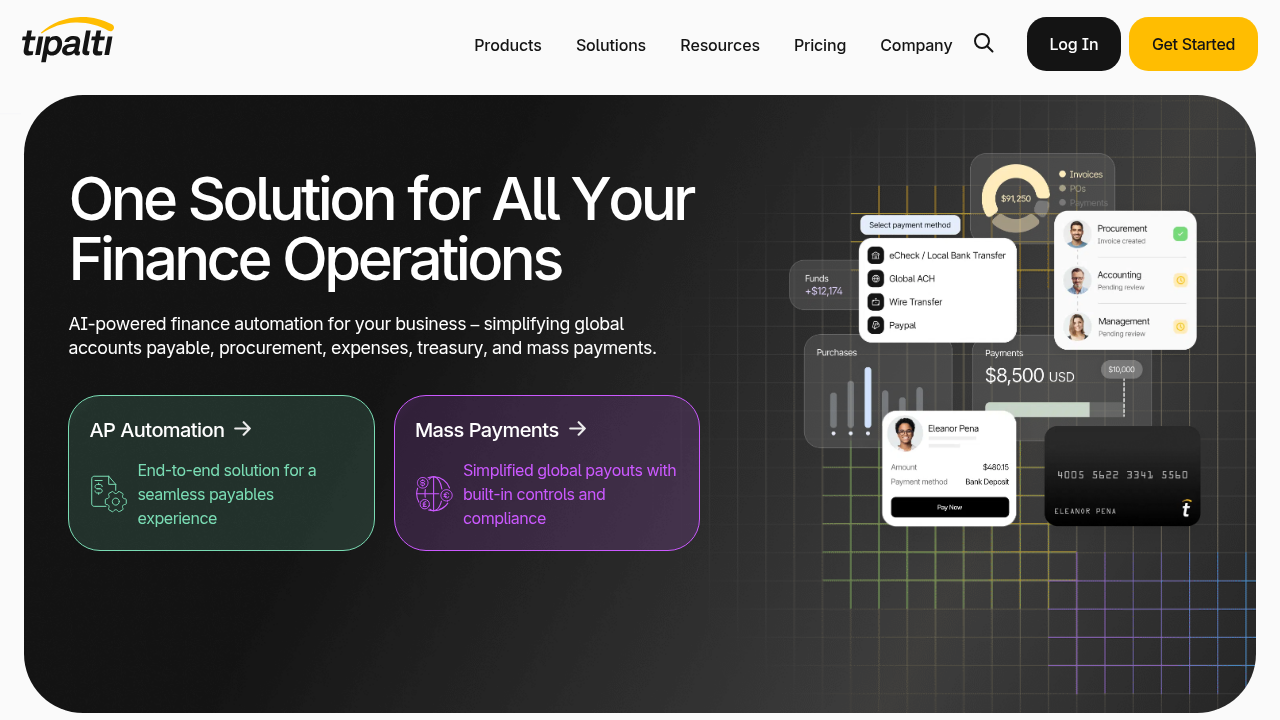
Tipalti’s vendor onboarding capabilities are built around a self‑service Supplier/Payee Hub that lets vendors, contractors, and suppliers securely provide and manage their own contact, tax, and payment details before they can be paid. Through a customizable portal or embeddable iFrame, vendors enter business information, upload tax forms (like W‑8/W‑9), choose payment methods and currencies, and access their payment history and status. The onboarding experience supports multiple languages and integrates compliance checks (such as tax form guidance and bank detail validation) to reduce errors and speed setup, while automated notifications and reminders help ensure vendors complete all required steps for accurate, compliant payouts globally.
Limitations
While most infrastructure today uses RESTful architecture, Tipalti still relies on an older SOAP API for managing payee information. This adds unnecessary complexity to the integration process. Critical workflows like tax information collection and payment approvals cannot be triggered or managed via the API. This limitation forces operations teams back into the dashboard for tasks that should be automated, slowing down the iteration cycles required by high-growth companies.
Bottom Line
Tipalti’s SOAP-based APIs and dashboard-dependent workflows limit automation, forcing manual handling of tax collection and payment approvals. For marketplaces onboarding hundreds of vendors weekly, this creates bottlenecks. Platforms that embed payments into their product need modern, RESTful APIs with webhooks and idempotency support to automate the full payout flow.
Feature Comparison Table for Payee Onboarding Solutions
Why Routable Is the Best Payee Onboarding Solution
Routable stands out because we built our infrastructure specifically for technology operators who view payments as a competitive product advantage. Traditional accounts payable tools are built for slow, invoice-based back-office functions, while payment acceptance providers treat payouts as an afterthought. We designed our system from the ground up to handle mass payouts, giving you the speed and reliability required to scale without expanding your operations team.
Automating compliance is the only way to grow safely. Manual data collection creates bottlenecks that slow down growth. By implementing vendor onboarding automation tools, you can instantly handle W-8 and W-9 tax form collection, TIN matching, and watchlist screening. We bake these checks directly into the onboarding flow, protecting your business from fraud and regulatory risk while you add thousands of new payees.
Engineering teams prefer Routable because we prioritize developer experience. You get a REST API that allows for full integration in under three days, complete with idempotency keys to prevent duplicate payments and webhooks for real-time data syncing. This technical foundation supports a standardized vendor onboarding workflow process that fits natively into your application, giving you control over the user journey.
Speed and flexibility define the payee experience. The future gig economy workforce demands fast, predictable access to their earnings. We enable you to offer Real-Time Payments (RTP), Same Day ACH, and local rails across 220+ countries and 140+ currencies. This flexibility keeps your creators, drivers, and sellers happy and engaged with your product.
Ultimately, Routable delivers the white-label experience and operational power necessary to manage high-volume disbursements. We allow you to own the relationship with your payees while we handle the complex banking and compliance logic in the background. If you need to scale mass payments efficiently, Routable is the partner built to help you do it.
Final Thoughts on Building Scalable Payout Operations
Choosing vendor portal software that actually scales means prioritizing compliance automation and developer experience over legacy invoice workflows. You need W-9 collection, TIN matching, and bank validation happening in real time, not through email threads. The best systems give your payees a white-label experience while your engineering team gets webhooks and idempotency keys. Routable delivers both, so you can focus on growing your business instead of managing payment operations.
FAQ
How do I choose the right payee onboarding platform for my workforce?
Start by evaluating whether the solution offers API-first infrastructure with webhook support and idempotency keys for reliable automation. Then confirm it handles compliance at scale—automated W-8/W-9 collection, TIN validation, and bank account verification. Finally, check if it provides the payment speed your payees expect (Same Day ACH, RTP) and whether you can white-label the experience to keep everything under your brand.
Which payee onboarding solution works best for high-volume international payouts?
Routable and Trolley both handle global disbursements well, but Routable covers 220+ countries with local rails and SWIFT support while offering 30-50% savings on FX rates. Routable also provides the developer experience and operational flexibility (CSV uploads alongside API) that scaling platforms need, without imposing minimum volume requirements like Trolley’s 100-payment threshold.
Can I automate tax compliance without slowing down my payee signup flow?
Yes, the right platform embeds W-8 and W-9 collection directly into your onboarding workflow and validates TINs against IRS records in real time. Routable automates this entire process—including 1042-S and 1099 filing—so your creators or drivers can complete signup in minutes while you stay compliant without manual intervention.
What’s the difference between payee onboarding tools and traditional AP software?
Traditional AP software like BILL focuses on invoice processing and approval workflows for a few hundred suppliers. Payee onboarding platforms for mass payments are built to handle thousands of new partners weekly through programmatic workflows. They prioritize API integration, instant compliance checks, and fast payment rails rather than manual invoice capture and routing.
When should I switch from my current payout provider to a specialized mass payments platform?
Consider switching when you’re processing hundreds of payouts weekly and your current system lacks API automation, forces payees out of your brand experience, or can’t offer fast payment options like Same Day ACH or RTP. If your operations team spends significant time on manual compliance tasks or your developers struggle with poor API documentation, you’ve outgrown your current solution.